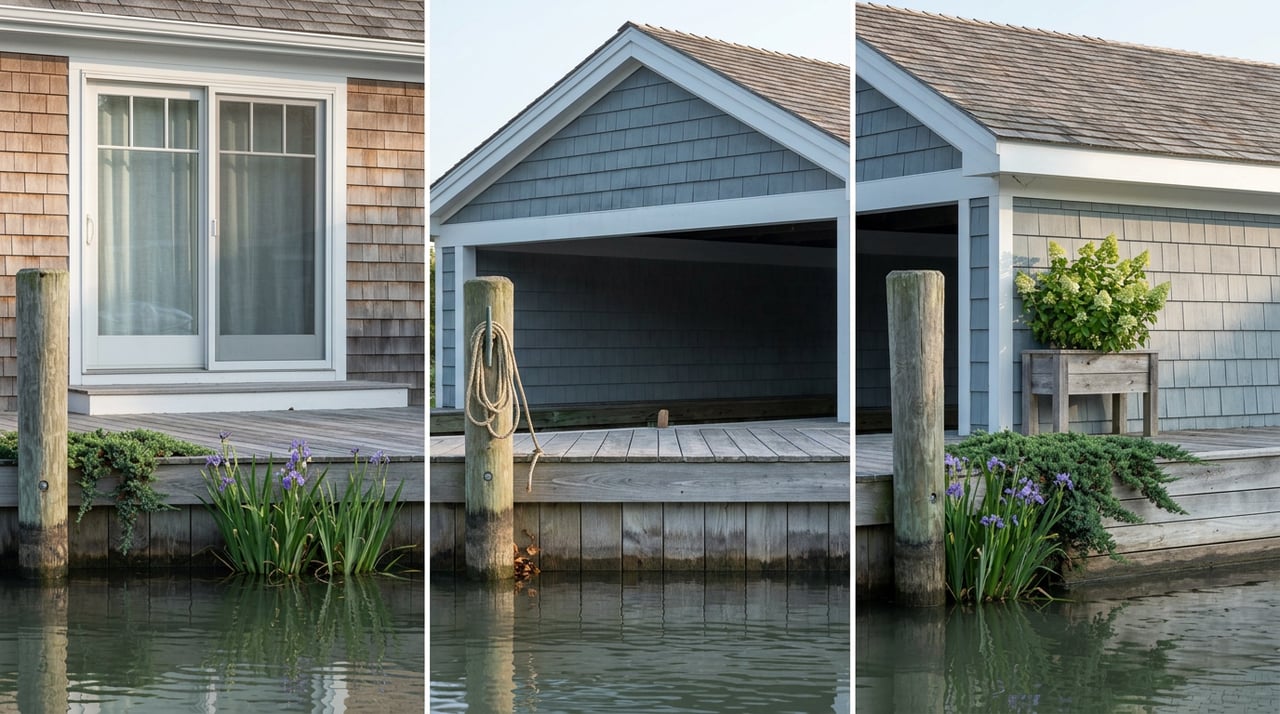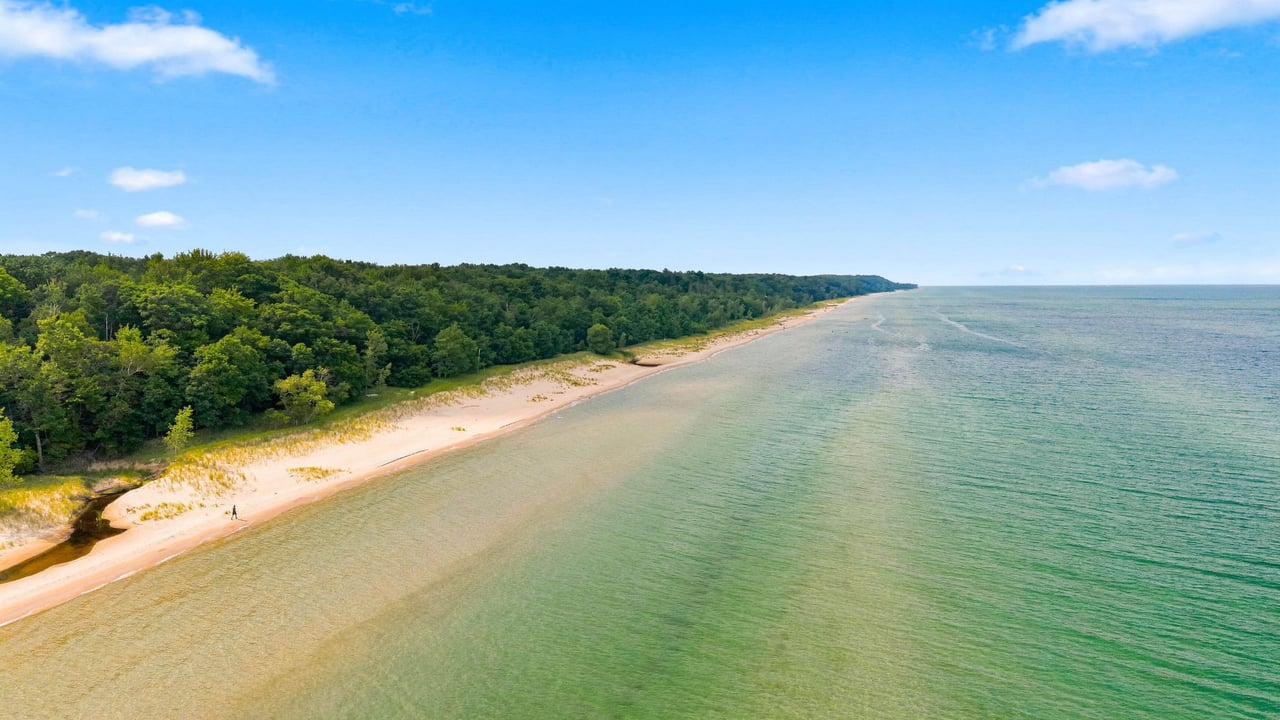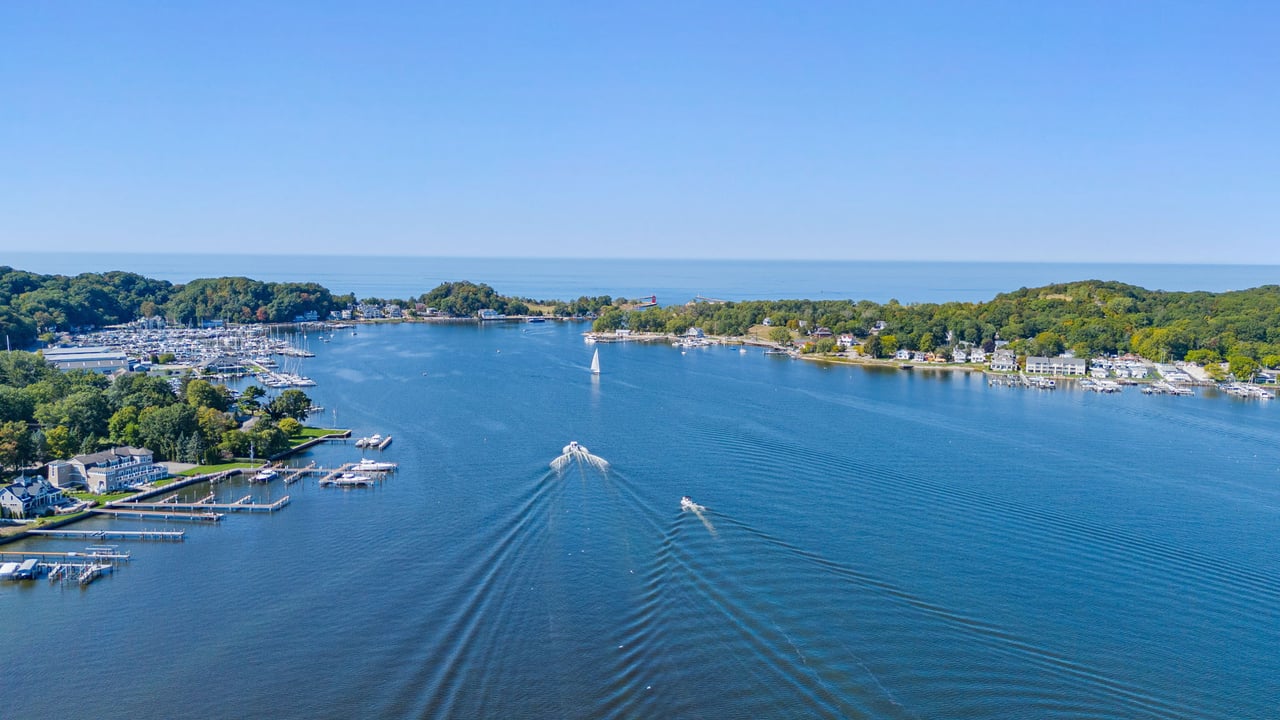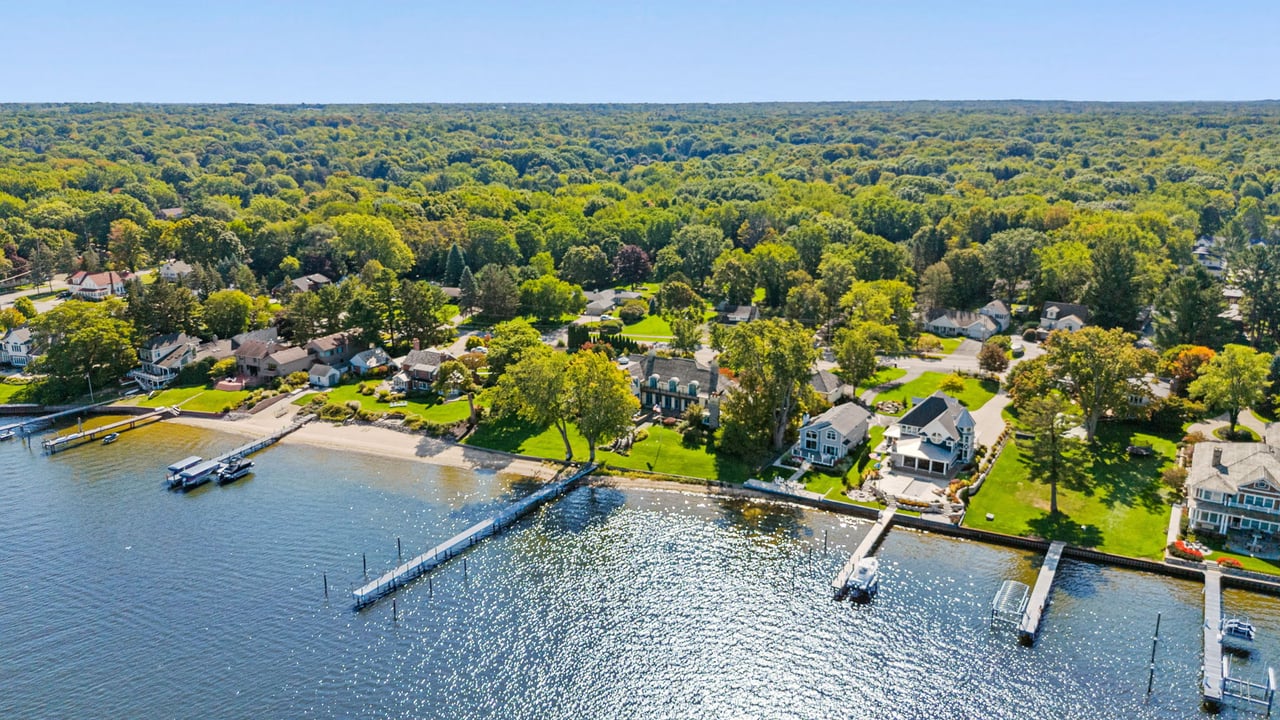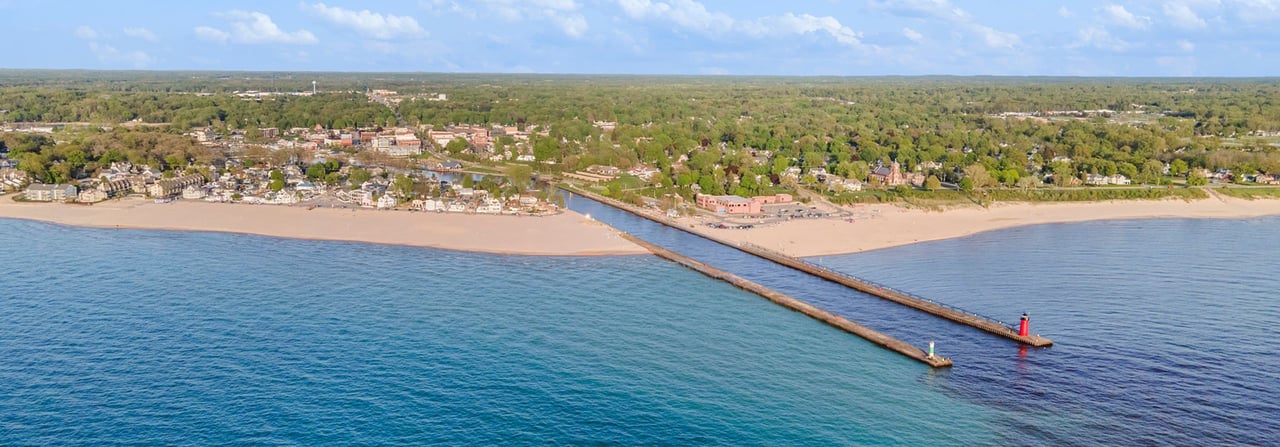
When you buy a Lake Michigan waterfront home, you’re not just buying the land and the house—you’re buying a set of legal rights related to the water that borders your property. These are called riparian rights, and they determine what you can do on the water, who else can use the beach in front of your home, and where your property actually ends. If you’ve never owned waterfront property before, this is one of the most important things to understand before you make an offer. The Andrea Crossman Group regularly helps buyers work through riparian questions because these details have real consequences for how you can use and enjoy a waterfront property.
Quick Snapshot: Riparian Rights Basics Riparian rights are legal rights tied to ownership of land adjacent to a body of water. On Lake Michigan, they typically include the right to access the water, use the water for reasonable purposes, and in most cases, own the bottomland to the ordinary low-water mark. |
What Riparian Rights Actually Mean for Lake Michigan Buyers
Riparian rights in Great Lakes states are governed by a combination of state law, common law, and recorded title documents. The specifics vary by state—Michigan, Wisconsin, Illinois, and Indiana each have their own framework—but certain core principles apply consistently across Lake Michigan’s shoreline.
The most fundamental riparian right is access. A waterfront property owner has the right to reach the water from their land. That sounds simple, but access can be complicated by recorded easements, shared access agreements, or disputes with neighboring property owners. When you’re evaluating a property, confirm that the access to the water is direct, legally clear, and not subject to any encumbrances that limit how or when you can use it.
Who Owns the Beach?
This question comes up constantly, and the answer is more complicated than most buyers expect. In Michigan, the general rule is that a waterfront property owner owns the land down to the ordinary high-water mark of the lake. The state holds the land below that mark in public trust. In practice, this means that the wet-sand beach area at the water’s edge may be considered public even if the dry-sand area above it is private.
Michigan courts have wrestled with this question in a series of cases over the past two decades. The current legal position is that the public has the right to walk along the water’s edge, but cannot access that beach by crossing private property. So if your property has road or trail access that leads to the water’s edge, members of the public may have the legal right to walk that shoreline—but only by reaching it via a public access point.
Wisconsin follows a similar framework with the public trust doctrine applying to navigable waters. Illinois and Indiana have their own interpretations. The bottom line: if you’re buying on the assumption of a fully private beach with no public access, verify that assumption specifically with a real estate attorney in the relevant state before you close.
State | Beach Ownership Rule (General) | Public Access to Shoreline |
|---|---|---|
Michigan | Owner holds to ordinary high-water mark | Public may walk water’s edge if accessible by public entry point |
Wisconsin | Public trust doctrine applies to navigable waters | Public access to navigable waters; shoreline rules vary |
Illinois | State owns submerged lands of Lake Michigan | Public beach access common on Illinois shoreline |
Indiana | Owner holds to ordinary high-water mark | Similar to Michigan; access rules by county vary |
Bottomland Ownership
In Michigan, riparian landowners generally own the bottomland—the lakebed beneath the water—out to the ordinary low-water mark of the lake. Beyond that line, the bottomland belongs to the state. This matters practically because ownership of the bottomland affects your ability to install a dock, place structures in the water, and claim rights if the water line shifts over time.
The exact boundary can shift as water levels change, which is one of the reasons lake level fluctuations matter so much to waterfront property owners. During high-water periods, the ordinary high-water mark moves landward and the publicly accessible shoreline shrinks. During low-water periods, it shifts lakeward. A surveyor experienced with Great Lakes boundary issues can help establish exactly where these lines are on a specific parcel.
Easements and Shared Access: Red Flags to Watch For
Not all waterfront properties have private, exclusive access to the lake. Some properties sold as “waterfront” or “lake access” actually share access via an easement across a neighboring parcel, or through a shared beach owned by a homeowners association. There’s nothing inherently wrong with shared access, but you need to know exactly what you’re buying.
Ask for the recorded easement documents and read them carefully. Key questions: How many other property owners share this access? What can and can’t you do under the easement (swimming, boating, dock installation)? Who maintains the access path and beach area? What happens if the easement is disputed or the shared beach is modified?
Also check for easements that run across your property in favor of others. A neighboring inland owner may have a recorded easement granting them the right to cross your land to reach the water. That’s a material fact that affects how you use your property and your ability to fence or restrict access.
Riparian Rights Due Diligence Checklist
✓ Get a full title search and read every recorded easement
✓ Confirm who owns the beach frontage and whether it’s shared
✓ Ask specifically about any prescriptive access claims (neighbors who have used the beach for years)
✓ Review survey documents showing the ordinary high-water mark boundary
✓ Consult a real estate attorney in the specific state where the property is located
✓ Ask your agent whether the property has been involved in any boundary or access disputes
Dock Rights and Water Use
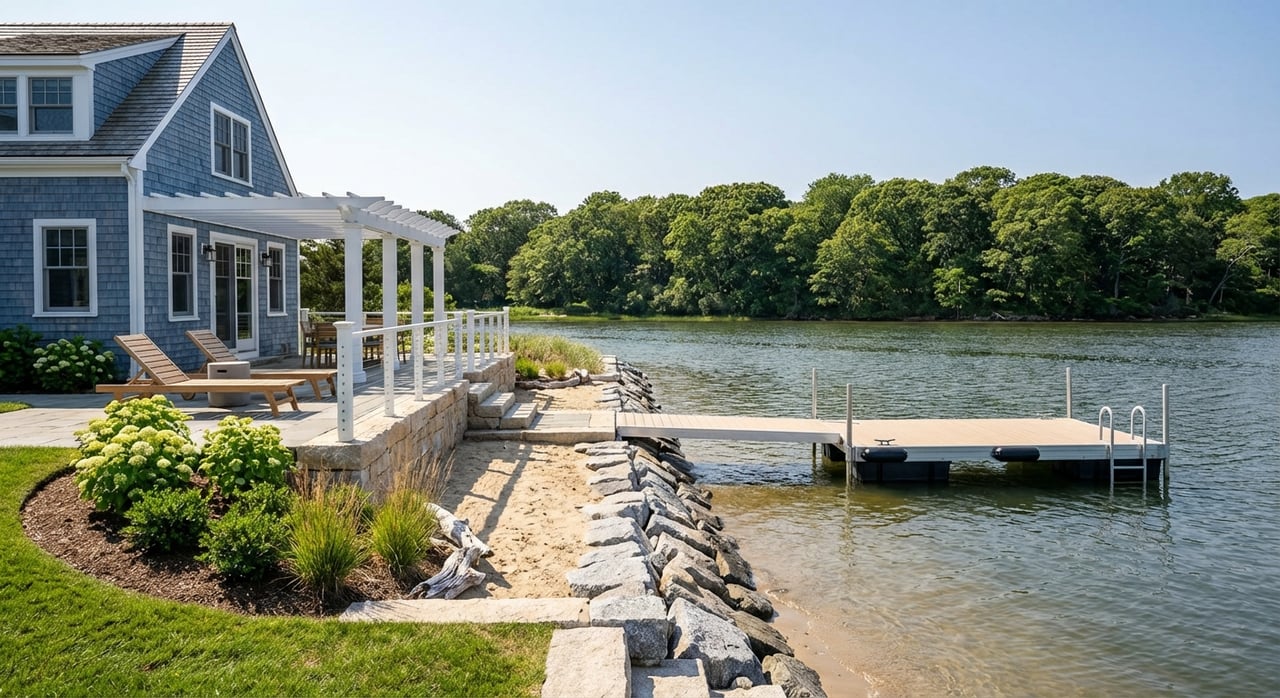
Riparian landowners generally have the right to build a dock on their waterfront property, but that right is not unlimited. Dock permits are required in Michigan and most other Great Lakes states, and the permitting process involves review by state environmental agencies and sometimes the Army Corps of Engineers. Permit requirements consider the dock’s impact on navigation, water quality, and neighboring properties.
If the property you’re buying already has a dock, verify that it has current, valid permits. An unpermitted dock can create liability for the new owner and may need to be removed or brought into compliance. If you plan to add a dock, check local permit requirements and timelines before buying—permitting can take longer than buyers expect, and some locations have restrictions that make dock installation difficult or impossible.
How Riparian Rights Transfer When the Property Sells
Riparian rights are appurtenant, meaning they attach to the land and transfer automatically when the property is sold. You don’t need a separate document to convey them. However, any easements, restrictions, or limitations on those rights also transfer. That’s why a thorough title search and a careful reading of the deed and survey documents are non-negotiable for waterfront buyers.
If the property has been subdivided, there may be questions about how riparian rights were allocated among the resulting parcels. In older subdivisions, the original waterfront parcel may have been divided in ways that left some lots without direct riparian rights. Your real estate attorney should review the chain of title specifically for this issue if you’re buying in a platted subdivision near the shoreline.
Do You Need a Real Estate Attorney?
Yes. For any waterfront purchase on Lake Michigan, engaging a real estate attorney who is licensed in the relevant state and has experience with Great Lakes riparian law is worth every dollar. This is not an area where general real estate knowledge is sufficient. The interplay between state law, recorded documents, and Great Lakes-specific legal precedent requires someone who practices in this space.
Your attorney should review the deed, survey, title commitment, and any easement documents before you remove contingencies. If there are any questions about boundary location, access rights, or shared use agreements, those should be resolved—or at minimum fully understood—before closing.
Frequently Asked Questions About Lake Michigan Riparian Rights
Can my neighbors use the beach in front of my Lake Michigan home?
It depends on state law and what’s recorded in the title documents. In Michigan, the general rule is that the public cannot access your dry-sand beach by crossing your private property, but the wet-sand area near the water’s edge may be accessible if the public can reach it via a public access point. A real estate attorney can advise on the specific rules for your parcel.
What’s the difference between riparian rights and a deeded lake access easement?
Riparian rights belong to properties that directly border the lake. A deeded access easement gives a non-waterfront property the right to use a specific access point to reach the water, typically across a neighboring waterfront parcel. Easement rights are typically more limited than full riparian rights—they grant access but not necessarily ownership of any portion of the shoreline or bottomland.
Can riparian rights be taken away?
Not easily. Riparian rights are property rights and generally cannot be extinguished without compensation under eminent domain. However, they can be limited by regulation—for example, environmental regulations that restrict dock installation or shoreline modification. They can also be encumbered by recorded easements that were granted before you bought the property.
What happens to my riparian rights if water levels change?
Water level changes can affect the practical location of property boundaries because those boundaries are often defined relative to the ordinary high- or low-water mark. During high-water periods, usable beach area shrinks. During low-water periods, it expands. This is one of the reasons lakebed surveys and boundary determinations are useful documents to have, particularly for high-value waterfront parcels.
Does every property marketed as ‘waterfront’ have full riparian rights?
No. Some properties are marketed as waterfront or lake access but are served by an easement rather than direct riparian ownership. Always verify what you’re actually buying before assuming the water rights match the marketing language. Your agent and attorney can help clarify this early in the process.
Buying Waterfront on Other West Michigan Lakes
Riparian and water-access questions are not unique to Lake Michigan. If you're also considering property on Lake Macatawa, Spring Lake, or Muskegon Lake, each of these connected West Michigan waterways has its own mix of state, local, and title-based rules governing docks, shared access, and shoreline use. The core homework is the same: confirm access, review easements, and involve a real estate attorney before you close.
Ready to Find Your Lake Michigan Home? Andrea Crossman Group specializes in Lake Michigan waterfront real estate. Whether you're buying your first lakefront property or selling a family cottage, we know this market inside and out. Contact Andrea Crossman Group today to start your search. |
The information in this post is intended for general educational purposes only and does not constitute legal advice. Riparian rights, shoreline regulations, and water access laws vary by state, county, and individual parcel, and they can be complex. Nothing here should be relied upon as a substitute for advice from a licensed real estate attorney in the state where the property is located. If you have questions about the specific rights attached to a property you're considering, consult a qualified attorney before making any decisions.