Should Sellers Offer a Mortgage Rate Buydown Instead of Cutting the Price?
With mortgage rates back above 7%, some sellers may be better off helping a buyer lower their monthly payment rather than simply reducing the asking price. Here’s how rate buydowns work and when they may make sense in West Michigan.
Mortgage rates are once again shaping nearly every part of the housing market.
Freddie Mac reported that the average 30-year fixed mortgage rate reached 7.28% on October 1, 2026, up from 7.03% the week before. That was the largest weekly increase in four years and pushed borrowing costs to their highest level in nearly three years. Freddie Mac
At the same time, sellers are facing more competition. Realtor.com reported that 20.8% of active listings had a price reduction in September, the highest share in four years, while active inventory increased 5.5% from a year earlier. Realtor
That creates an important question for sellers:
If a buyer is struggling with affordability, is it better to cut the price—or use that money to help lower the buyer’s mortgage rate?
In some situations, a mortgage rate buydown may have a larger impact on a buyer’s monthly payment than a traditional price reduction.
What Is a Mortgage Rate Buydown?
A mortgage rate buydown is an arrangement where money is paid upfront to reduce the interest rate on a buyer’s mortgage.
That money may come from the buyer, seller, builder, or another permitted source, depending on the loan program and transaction.
There are two common versions:
Permanent buydown:
Funds are used to lower the interest rate for the full life of the loan.
Temporary buydown:
The buyer receives a lower effective rate for the first year or several years before the payment increases to the full note rate.
You may hear terms such as a 2-1 buydown, where the effective rate is reduced by 2 percentage points in year one and 1 point in year two before returning to the full rate.
The exact structure, cost, and eligibility depend on the lender and loan program.
Why Buydowns Are Getting More Attention
Higher rates have made monthly payments one of the biggest obstacles for buyers.
Even when a buyer likes a home and can afford the purchase price, the payment at today’s interest rate may be more than they are comfortable carrying each month.
That is why financing incentives are becoming more common.
Realtor.com recently found that 18.8% of new-construction listings offered some type of buyer incentive in August, with reduced mortgage rates by far the most common incentive. Reduced-rate offers appeared on 13.8% of new-construction listings in that analysis. Realtor
Builders have been using this strategy because they understand something important:
Buyers often think in terms of monthly payment, not just purchase price.

Price Cut vs. Rate Buydown
Consider a simple example.
Suppose a home is listed for $500,000.
The seller is willing to give up $10,000 in value to get the deal done.
One option is to reduce the price to $490,000.
Another option may be to keep the purchase price at $500,000 and use some or all of that $10,000 toward an allowable seller concession that helps lower the buyer’s rate or closing costs.
Depending on the loan amount and the structure of the buydown, the second option could potentially reduce the buyer’s monthly payment more than a $10,000 price reduction.
That does not mean a buydown is always the better choice.
It means sellers and buyers should compare the actual numbers instead of assuming a lower purchase price automatically creates the best deal.
Why Buyers May Prefer the Monthly Savings
A buyer typically finances most of the purchase price.
Because of that, a relatively modest price reduction may not change the monthly mortgage payment very much.
Reducing the interest rate, on the other hand, affects the payment across the financed balance.
That can be especially meaningful when mortgage rates are above 7%.
For buyers who expect to remain in the home for several years, a permanent rate reduction may be particularly attractive.
For others, a temporary buydown may provide lower payments during the first years of ownership while they settle into the property.
The right structure depends on the buyer’s finances, loan program, and future plans.
Why Sellers Might Consider It
Sellers often focus on one number: the sale price.
But the strongest offer is not always the one with the highest headline price.
A seller who understands what is preventing buyers from moving forward may be able to structure a more attractive deal without making a dramatic price cut.
For example, a seller might offer assistance with:
- Mortgage rate buydown
- Buyer closing costs
- Prepaid expenses
- Inspection-related credits
- Repairs
- Association fees, where allowed
- Other lender-approved concessions
A well-structured concession can sometimes help a property stand out against competing listings.

When a Buydown Might Make Sense
A seller-paid rate buydown may be worth considering when:
The home has been on the market longer than expected.
There are several similar homes competing for the same buyers.
Buyers like the property but are struggling with the monthly payment.
The seller has enough equity to offer a concession.
The home is otherwise priced close to market value.
The buyer’s lender confirms the concession is permitted and beneficial.
In those circumstances, addressing the buyer’s financing problem directly may be more effective than another price reduction.
When a Price Reduction May Be the Better Move
A buydown cannot fix an overpriced listing.
If comparable properties are selling for significantly less, buyers may simply view the asking price as unrealistic.
In that case, reducing the price may still be necessary.
A price reduction may also make more sense if:
- The home is clearly priced above comparable sales
- The seller needs to attract a larger pool of buyers
- The buyer is paying cash
- The buyer does not plan to keep the mortgage long enough to benefit
- The loan program limits available seller concessions
- An appraisal could become an issue at the higher price
The strategy should solve the actual reason the home is not selling.
Seller Concessions Have Limits
This is an important point for both buyers and sellers.
Sellers cannot simply contribute an unlimited amount toward a buyer’s financing.
Mortgage programs have rules regarding how much a seller can contribute toward closing costs, prepaid expenses, and interest-rate buydowns.
Those limits can vary based on:
- Loan type
- Down payment
- Occupancy
- Loan-to-value ratio
- Purchase price
That is why any buydown strategy should be discussed with the buyer’s lender before it becomes part of an offer.
A REALTOR® can help negotiate the structure of the transaction, but the lender determines what financing concessions are actually permitted.
The Current Market Makes Creativity More Important
September’s housing data showed a market under pressure from higher borrowing costs.
Realtor.com reported that pending sales were down 4.1% year over year, while price reductions reached their highest share since October 2022. Realtor
That does not mean homes have stopped selling.
It means buyers are becoming more selective, affordability is playing a larger role, and sellers may need to think beyond simply putting a property on the market and waiting for offers.
The strongest strategy may involve some combination of:
Correct pricing.
Good presentation.
Strong marketing.
Flexible terms.
And understanding what matters most to today’s buyer.
What This Could Mean in West Michigan
West Michigan has a wide variety of property types, so there is no single strategy that applies everywhere.
A starter home in Grand Rapids may still receive multiple offers.
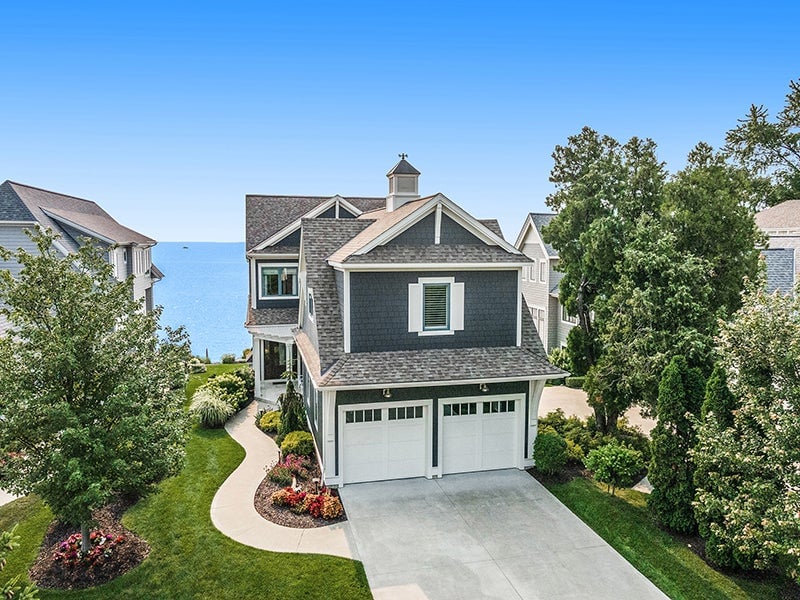
A luxury waterfront property in Saugatuck may have a much smaller buyer pool.
A condo in Holland may compete against several similar units.
A home on acreage may appeal to a buyer who prioritizes land and privacy over rate incentives.
That is why the decision between a price cut and a mortgage-rate buydown should be based on the individual property and buyer.
The question is not:
“Which strategy is better?”
It is:
“Which strategy solves the problem that is preventing this particular transaction from coming together?”
The Bottom Line
With the average 30-year mortgage rate at 7.28%, affordability remains one of the biggest challenges facing buyers right now. Freddie Mac
At the same time, sellers are dealing with more inventory and more price competition.
For some transactions, a traditional price reduction will still be the right answer.
For others, using part of that same money toward a mortgage-rate buydown or another buyer concession could create more value where it matters most: the monthly payment.
Before making that decision, sellers should look closely at comparable sales, competing listings, days on market, buyer feedback, and the financing options available to the buyer.
Sometimes the best way to sell a home is not simply lowering the price.
It is making the home easier for the right buyer to afford.