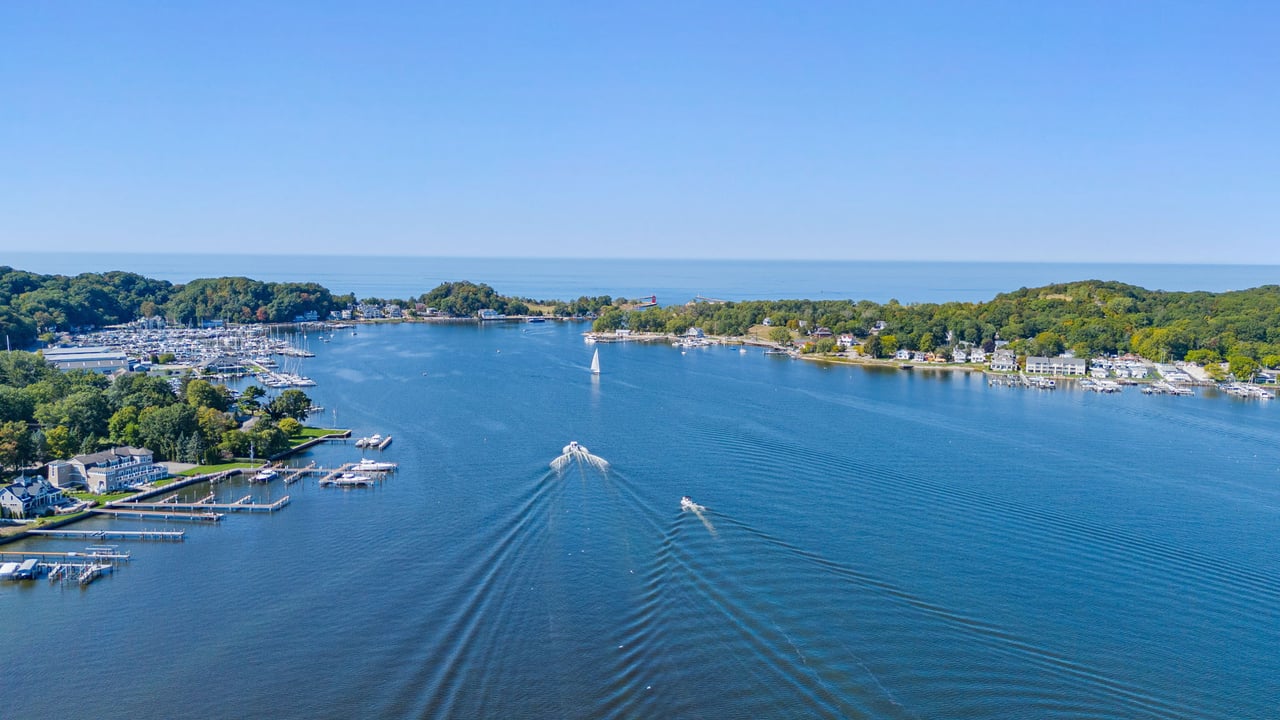
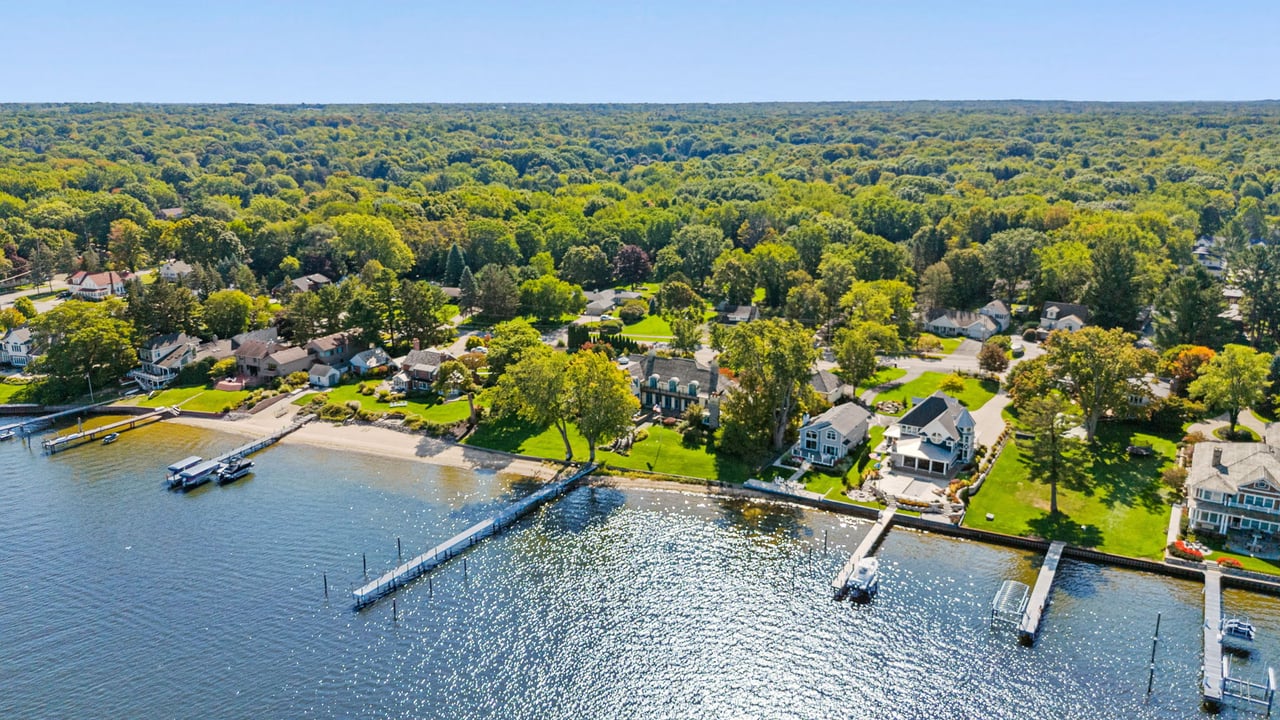
A seller listing a cottage on Lake Macatawa this fall does a little homework first. She searches "does Michigan require a septic inspection to sell a house" and finds that the Ottawa County Conservation District says Michigan is the only state in the country without a statewide sanitary code, so whether an inspection is required depends entirely on where the property sits. She reads that and relaxes a little. Then she calls a title company to schedule her closing and learns that Ottawa County, where her Park Township waterfront sits, has had a county-wide Time of Sale/Transfer Septic Ordinance on the books for years. No inspection, no closing. Her research was accurate. It just wasn't about her county.
That gap between what's true about Michigan generally and what's true about this specific shoreline is where a lot of sellers get caught. It's worth walking through exactly what Ottawa County requires, why an inspection carries more weight on Lake Macatawa than it would on a landlocked lot two counties over, and what it actually costs when a system doesn't pass.
The Patchwork Everyone Warns You About, and the County That Isn't Optional
The Michigan Septic Guide says Michigan's public health code hands septic and well oversight to local health departments, with 45 of them writing their own rules. Some counties require an inspection every time a property changes hands. Some only require one near waterways. Plenty require nothing at all. That patchwork is real, and it's why generic advice about Michigan septic sales tends to hedge everything with "it depends on your county."
Ottawa County isn't a hedge. The Ottawa County Conservation District states plainly that the county has enacted a county-wide Time of Sale/Transfer Septic Ordinance requiring inspection of well and septic systems before a property sale can proceed. Ottawa County's own Environmental Health Division runs a Real Estate Services program specifically built around this, offering evaluations that protect buyers, sellers, and agents from disputes down the line. If your Lake Macatawa property is on a private septic system, this isn't a box you can skip by selling "as is." Michigan's Seller Disclosure Act already requires you to disclose the system's condition, age, and pumping history on the standard disclosure form. Ottawa County adds a second layer on top of that: an actual inspection has to happen.
For a seller who's only ever sold property in a county without this rule, or who's moving from out of state and assumes "no state law" means "no local law either," this is the detail that shows up as a surprise on a closing timeline that was supposed to be simple.
Why the Inspection Carries More Weight Here Than on Most Michigan Lakes
Plenty of Michigan counties with lakefront property require time-of-sale septic inspections. What makes Lake Macatawa different isn't the ordinance itself. It's that this particular lake has a public paper trail documenting exactly the kind of problem a failing septic system contributes to, and that paper trail is old, detailed, and still being updated every year.
In 1999, the U.S. Environmental Protection Agency approved a total maximum daily load, or TMDL, for phosphorus in Lake Macatawa, capping how much phosphorus the lake can receive annually and still support healthy fish and aquatic life. The Macatawa Area Coordinating Council ran the resulting watershed restoration effort from 1996 until 2021, when management passed to the ODC Network. That work has continued under Project Clarity, a roughly $12 million, ten-year restoration partnership between the Outdoor Discovery Center, the Macatawa Area Coordinating Council, Grand Valley State University's Annis Water Resources Institute, and other local partners, focused on wetland restoration and reducing the sediment and phosphorus washing into the lake.
The most recent public monitoring data, from AWRI's 2024 water quality dashboard, shows where things stand:
Mean total phosphorus in 2024 measured 107 micrograms per liter against a target of 50. Chlorophyll-a came in at 60 against a target of 22. Mean Secchi depth, the standard measure of water clarity, was 0.59 meters against a target of 1.0 meter.
Project Clarity's own 2024 annual report describes those numbers as showing limited to no improvement, consistent with a lake still classified as impaired. None of this means septic systems are the main driver. Most of the pollution load in the Macatawa watershed originates from agricultural and urban runoff spread across 175 square miles of land that drains into the lake. But the Ottawa County Conservation District is direct about the secondary role septic plays: undersized, poorly sited, or structurally failing systems can add excess nutrients, household chemicals, and E. coli bacteria directly into the ground or nearby surface water, and several watersheds in Ottawa County already show elevated E. coli levels tied in part to failing systems.
Here's the part that changes how a buyer's agent reads a listing on this lake. On most inland lakes, a septic system's condition is a private matter between buyer and seller, verified once by an inspector and then forgotten. On Lake Macatawa, that same system sits inside a watershed where phosphorus levels, chlorophyll counts, and clarity readings are published annually by a university research institute and tracked by a named restoration project with its own public reporting. A buyer who wants to check whether the lake they're about to own frontage on is improving or stalling doesn't have to take anyone's word for it. That visibility raises the stakes on anything that touches the lake's water quality, and a septic system is one of the few pieces of that puzzle an individual seller actually controls and can document.
What Happens When the Inspection Doesn't Pass
Across Michigan counties that enforce time-of-sale septic ordinances, the inspection itself typically runs $300 to $600 and takes two to four hours, covering the tank, the distribution box, and the drain field.
The expensive part is what happens if the system fails. A cracked tank or damaged baffle is a moderate repair, often in the $3,000 to $7,000 range. A failed drain field is the finding that actually stalls closings, and full replacement on an older or larger system can run anywhere from $5,000 to more than $20,000 depending on soil conditions, system size, and how much of the original infrastructure has to be replaced. On a lakefront lot, replacement can get more complicated still.
Septic & Well Pro says buyers on FHA or VA financing generally can't close on a home with a documented septic failure until the system is repaired, which narrows the buyer pool for an as-is sale considerably. Cash buyers and investors will often still transact, but at a price that reflects the repair cost plus some margin for uncertainty.
What to Do Before You List
If you're preparing to sell a home on Lake Macatawa with a private septic system, a few steps now save weeks later:
- Confirm with the Ottawa County Health Department's Environmental Health Division whether your property has been inspected under the Time of Sale ordinance and if so, whether that inspection is still valid for a new sale.
- Pull any permits, as-built drawings, or prior repair records for the system. Older Ottawa County properties, especially those built before formal permitting was consistent, sometimes have none, and that absence itself is worth knowing before a buyer's inspector finds it first.
- If you haven't pumped the tank in the last three to five years, do it before listing. A documented recent pumping is one of the simplest things that demonstrates a well-maintained system to both an inspector and a buyer.
- Complete your Michigan Seller Disclosure Statement carefully and honestly on the septic questions, including age, last pumping date, and any past failures or repairs, even ones you've already fixed. Michigan disclosure law treats known material defects seriously, and a documented history protects you as much as it informs the buyer.
- If your property already has a passing inspection on file, keep the paperwork visible in your listing packet. On this particular lake, a clean, documented septic history is a small thing that answers a question a careful buyer was going to ask anyway.
A Few Direct Questions
Does this apply if my home is on municipal sewer instead of septic? No. According to Ottawa County, the Real Estate Transfer Evaluation Program applies to private well and septic systems, so homes connected to city sewer and water in Holland or other municipal service areas aren't subject to this particular inspection, though general disclosure obligations still apply to whatever systems the home does have.
How do I find out if my specific property has already been inspected? Ottawa County's Environmental Health Division maintains records for properties it has evaluated. Contacting the department directly, or requesting property records through the county's online health services portal, is the fastest way to confirm status before you list.
Is a failing septic system the reason Lake Macatawa's water quality numbers look the way they do? Not primarily. Most of the phosphorus load comes from runoff across the broader 175-square-mile watershed, much of it agricultural. Septic systems are one documented contributing factor among several, and the one a homeowner can most directly verify and control.
Selling waterfront on a lake with this much public data attached to it rewards sellers who get ahead of the paperwork rather than reacting to it during a due diligence window. If you're weighing a sale on Lake Macatawa, or trying to understand how a property's systems and history will read to a buyer who's done this kind of homework, the team at Andrea Crossman Group works this shoreline closely enough to walk you through it before it becomes a closing week problem. Discover Lakeshore Living starts with knowing exactly what you're selling.
This article is general information, not legal, tax or financial advice. Consult a qualified professional about your situation.