West Michigan Home Prices Are Down 6.2% Year Over Year — Is the Market Finally Changing?
October brought more homes for sale, fewer closed sales, and a lower regional median price across Allegan, Muskegon, and Ottawa counties. Here’s what the newest West Michigan housing data actually means for buyers and sellers.
For much of the past several years, one question has followed the housing market:
When are home prices finally going to come down?
The newest West Michigan numbers give buyers and sellers something worth paying attention to.
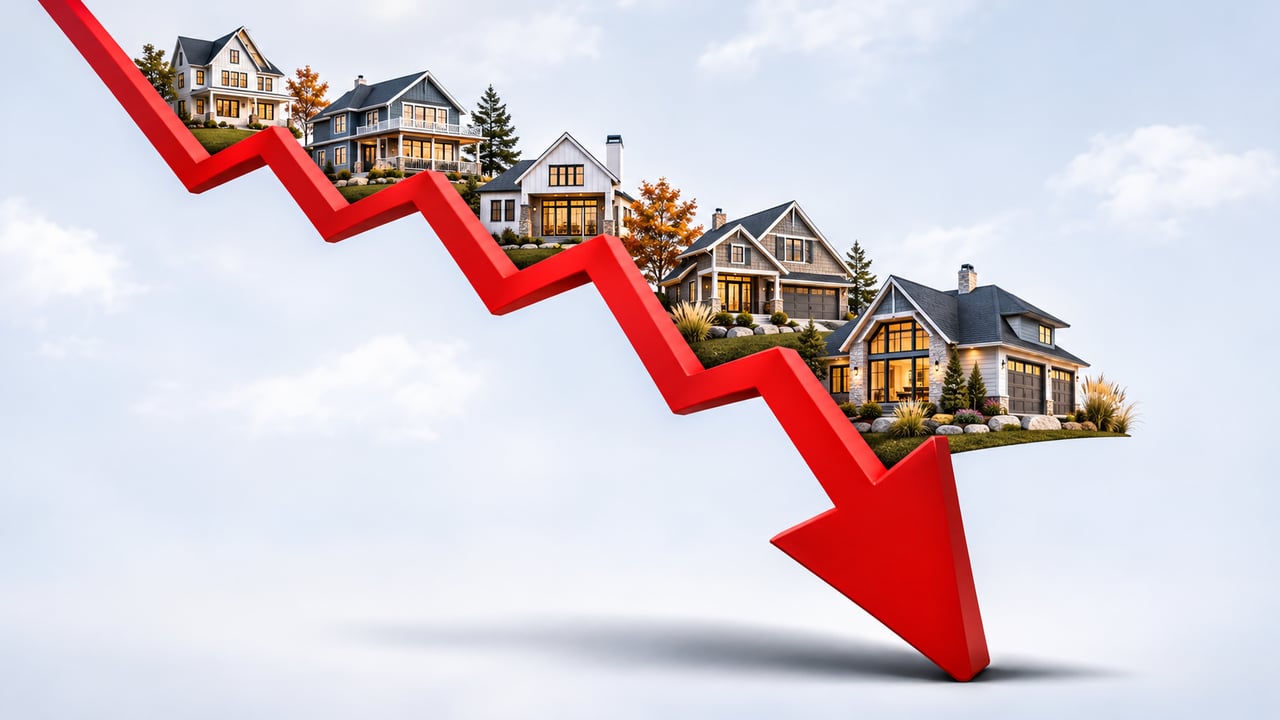
According to data released November 2 by the West Michigan Lakeshore Association of REALTORS®, the median sale price across Allegan, Muskegon, and Ottawa counties was $340,000 in October 2026 — down 6.2% from October 2025.
At the same time:
- 429 homes closed, down 21% year over year.
- Active inventory reached 1,241 homes, up 10%.
- Total sales volume fell 16% to approximately $186 million.
- Homes averaged 31 days on market across the three-county region.
Those numbers certainly suggest the market is changing.
But they do not mean every home in West Michigan suddenly lost 6.2% of its value.
The reality is much more local.

First: What Does the 6.2% Decline Actually Mean?
This distinction is important.
A 6.2% decline in the regional median sale price means the midpoint of the homes that sold in October was lower than the midpoint one year earlier.
It does not mean every property declined by 6.2%.
The mix of homes selling in a particular month can influence the median.
For example, if fewer luxury properties close and more lower-priced homes sell, the regional median can move lower even if individual home values have not fallen by the same amount.
That is why buyers and sellers should look beyond one headline number.
Still, the October report becomes more interesting when combined with the other data.
Inventory is rising.
Sales are falling.
Dollar volume is down.
And buyers have more properties to compare.
Together, those numbers point toward a market that is becoming more balanced.
October Was Noticeably Slower Than a Year Ago
Closed sales dropped 21% year over year across the three-county region.
That is a significant slowdown.
In October 2026:
Allegan County: 101 sales, down 1%
Muskegon County: 137 sales, down 33%
Ottawa County: 191 sales, down 20%
Muskegon experienced the largest decline in transaction volume, while Allegan remained comparatively steady.
This is another reminder that there is no single West Michigan housing market.
County, community, price range, condition, and property type all matter.
Buyers Have More Homes to Choose From
One of the clearest trends continues to be inventory.
There were 1,241 active listings across Allegan, Muskegon, and Ottawa counties in October, up 10% from the previous year.
County by county:
- Allegan: 302 active listings, up 11%
- Muskegon: 471, up 7.5%
- Ottawa: 468, up 10%
More inventory changes buyer behavior.
When buyers have only one or two realistic options, they may be more willing to overlook an aggressive price, dated finishes, or unfavorable terms.
When they have five or six options, comparison becomes much easier.
That puts additional pressure on sellers to price and present their homes correctly.

The Market Has Been Moving in This Direction for Several Months
October did not happen in isolation.
The regional median sale price was approximately:
August: $369,000
September: $360,000
October: $340,000
But those monthly changes should be interpreted carefully because real estate is seasonal.
Fall and winter typically bring different inventory, buyer activity, and property mixes than spring and summer.
The more important development is that rising inventory has persisted.
Active listings were:
1,170 in August
1,235 in September
1,241 in October
Buyers clearly have more options than they did a year ago.
That is one of the most meaningful shifts in the market.
But Prices Are Not Falling Everywhere
This is where the October report gets particularly interesting.
The regional median declined, but two of the three counties actually posted year-over-year price increases.
Allegan County
Median sale price: $340,000
Year-over-year change: down 6.2%
Active inventory: up 11%
Closed sales: down 1%
Muskegon County
Median sale price: $260,000
Year-over-year change: up 3.3%
Active inventory: up 7.5%
Closed sales: down 33%
Ottawa County
Median sale price: $430,000
Year-over-year change: up 7.5%
Active inventory: up 10%
Closed sales: down 20%
That makes the regional headline much more nuanced.
Prices weakened in Allegan County, while median prices remained higher than a year ago in both Muskegon and Ottawa.
So Is West Michigan Becoming a Buyer's Market?
Parts of the market are certainly becoming more favorable to buyers.
Buyers have more selection.
Sales have slowed.
Sellers are competing against more active listings.
And higher mortgage rates are limiting demand.
But calling the entire region a buyer's market would oversimplify what is happening.
A well-priced home in a desirable neighborhood can still attract attention quickly.
A unique Lake Michigan property may have little true competition.
A renovated downtown Holland property can behave differently from acreage in Fennville.
A Spring Lake waterfront home can behave differently from a conventional subdivision property.
The balance of power increasingly depends on the specific property.
Higher Mortgage Rates Are Still Affecting Demand
Mortgage rates remain a major part of the story.
WMLAR reported that the national average mortgage rate was 7.24% as of October 29, compared with 6.17% one year earlier.
That difference affects monthly affordability considerably.
A buyer who could comfortably afford one price range at a 6% rate may need to adjust when rates move above 7%.
That can lead buyers to:
- Lower their maximum purchase price
- Request closing-cost assistance
- Explore mortgage-rate buydowns
- Negotiate more aggressively
- Take longer to choose a property
- Walk away from homes they believe are overpriced
This is one reason more inventory does not automatically translate into more sales.
Buyers may have more choices while simultaneously having less purchasing power.
National Data Shows a Similar Affordability Challenge
The broader U.S. market is showing similar tension.
September existing-home sales increased 1.5% from August, but remained 2.2% below the previous year.
National inventory increased to 1.60 million homes, representing approximately 4.8 months of supply. The national median existing-home price was $417,500, up 1.3% year over year.
Pending sales were weaker.
September pending home sales fell 7.3% from the previous month and 11.3% from a year earlier, with declines across all four major U.S. regions.
So West Michigan is not experiencing this slowdown in isolation.
Higher borrowing costs continue to affect buyers across the country.
What This Means for West Michigan Buyers
For buyers, October's numbers are not necessarily a signal that they should wait for prices to collapse.
They are a signal that more negotiating opportunities may exist.
That could mean:
More time to evaluate a property
Some buyers may no longer need to make a decision within hours of seeing a home.
More ability to compare
Increasing inventory makes it easier to evaluate multiple homes against one another.
More negotiating opportunities
Properties that have been sitting on the market may offer room on price, closing costs, repairs, or other terms.
More importance on financing
Higher mortgage rates still have a major impact on the monthly payment, even if purchase prices soften.
More reason to study each property individually
A broad regional price decline tells you very little about whether a specific home is priced correctly.

What This Means for Sellers
For sellers, the October report is a reminder that the strategy that worked during the ultra-low-inventory market may not work today.
Buyers now have alternatives.
That makes several things increasingly important.
Pricing correctly from the beginning
An unrealistic asking price can cause buyers to move on to competing listings.
Watching the competition
Your home is competing against every similar property currently available, not only recently sold properties.
Presentation
Photography, cleanliness, staging, landscaping, and property information matter more when buyers have options.
Responding to feedback
Repeated comments about price, condition, or updates should not automatically be dismissed.
Being willing to negotiate
A good offer slightly below asking may be worth serious consideration depending on days on market and competing inventory.
A Price Reduction Is Not the Same as Losing Value
This distinction is also important for sellers.
Suppose a home is listed for $800,000 but comparable sales support a value closer to $750,000.
Reducing the asking price to $750,000 does not necessarily mean the home "lost" $50,000.
It may simply mean the original list price was too high.
List price is a marketing decision.
Market value is determined by what qualified buyers are willing to pay relative to competing properties and recent comparable sales.
In a higher-inventory market, that difference becomes easier to see.
Days on Market Tell an Interesting Story
One surprising part of October's report is that regional average days on market remained 31 days, but that figure was actually 4.1% lower than October 2025.
County results were mixed:
- Allegan: 30 days, down 9.1%
- Muskegon: 31 days, down 6.1%
- Ottawa: 33 days, up 3.1%
That tells us this is not simply a story of every home sitting dramatically longer.
Homes can still move.
The challenge is that fewer transactions are happening overall.
For sellers, that reinforces the importance of being one of the listings buyers choose.
Waterfront and Luxury Homes Need Separate Analysis
Broad regional statistics become even less useful when evaluating luxury and waterfront properties.
West Michigan's luxury market showed notable strength in the third quarter.
WMLAR reported that sales of $1 million-plus homes increased 13% year over year, with a median luxury sale price of $1.5 million. Active luxury inventory also increased 26%.
Those properties are often driven by different factors:
- Lake Michigan frontage
- Bluff height
- Beach quality
- Dock access
- Water depth
- Privacy
- Architecture
- Renovation quality
- Views
- Lot size
- Scarcity
That is why a broad regional median-price decline should never be used by itself to value a unique waterfront home.
Sellers Should Pay Attention Heading Into Winter
November and December traditionally bring fewer new listings.
But they can also bring fewer active buyers.
A seller who remains on the market should know exactly where their property stands relative to the competition.
Ask:
How many comparable homes are available?
How many recently went pending?
Have competitors reduced their prices?
How long are similar properties taking to sell?
What feedback are buyers giving?
Is the home getting showings but no offers?
If a property is consistently being viewed but not receiving offers, the market may be sending a message.
Buyers Should Watch Listings That Have Been Sitting
The winter market can create interesting opportunities for buyers.
A property that originally listed in July or August may now have:
- Several months of market exposure
- One or more price reductions
- Fewer competing buyers
- A seller facing winter carrying costs
- More comparable inventory
That does not mean buyers should automatically submit an extreme low offer.
But it can create an opportunity to have a more meaningful negotiation.
Is the Market Finally Changing?
Yes — but probably not in the dramatic way some headlines suggest.
The West Michigan market is clearly different from the highly competitive environment buyers experienced when inventory was extremely limited.
There are more homes available.
Sales activity has slowed.
Regional pricing has softened.
Buyers have more ability to compare properties and negotiate.
But this is not a uniform decline.
Ottawa County's median price was still up 7.5% year over year in October.
Muskegon's was up 3.3%.
Luxury real estate showed strength during the third quarter.
And individual neighborhoods and property types continue to behave differently.
The better description is:
West Michigan is becoming a more selective housing market.
Buyers are becoming more particular.
Sellers have more competition.
And pricing strategy matters more.
The Bottom Line
October's housing report deserves attention.
Across Allegan, Muskegon, and Ottawa counties, the regional median sale price fell 6.2% year over year to $340,000, while closed sales declined 21% and inventory increased 10%.
Those numbers suggest that the balance of the West Michigan housing market is continuing to shift.
But they do not mean every home is declining in value.
The market is becoming increasingly local and increasingly property-specific.
For buyers, that can create more choice and more negotiating opportunities.
For sellers, it makes accurate pricing, strong presentation, and understanding the competition more important than they have been in years.
And for anyone trying to understand what their own property is worth, the answer is unlikely to come from one regional statistic.
It comes from looking closely at your specific market, your competition, and your property.