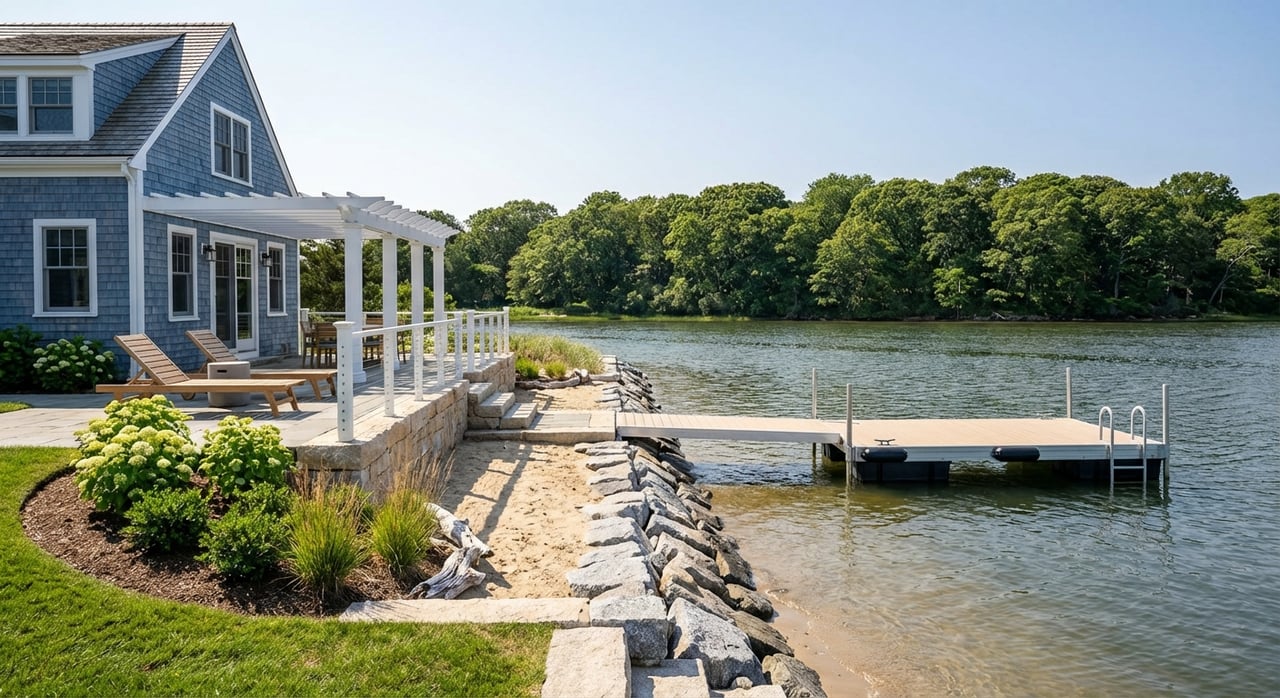
How Much Can You Actually Negotiate on a Home Right Now?
With more inventory, more price reductions, and fewer buyers competing, West Michigan buyers may have more leverage than they did in recent years — but how much you can negotiate still depends heavily on the property.
For several years, buying a home often meant moving quickly, limiting contingencies, and worrying about another buyer getting there first.
That environment has changed.
Across West Michigan, buyers now have more homes to choose from. Active listings across Allegan, Muskegon, and Ottawa counties reached 1,235 in September 2026, up 16% from a year earlier, while closed sales fell 18%. Homes also spent an average of 31 days on the market, up 15% year over year.
Nationally, the shift is even more noticeable. Realtor.com reported that 20.8% of active listings had a price reduction in September, while Redfin estimated that more than 60% of homes sold below their original asking price.
That means buyers have negotiating opportunities.
But it does not mean every seller is willing to accept a major discount.
The amount of leverage a buyer has still comes down to the individual property, its pricing, its condition, how long it has been listed, and how much competition exists.

Buyers Have More Leverage Than They Did a Few Years Ago
The basic reason is supply and demand.
There are more homes available while fewer buyers are actively competing for them.
Redfin estimated that there were 62.6% more sellers than buyers nationally in September, the largest gap in its data going back to 2013.
At the same time, West Michigan inventory continues to rise.
In September:
- Allegan County had 291 active listings, up 7.4%.
- Muskegon County had 463, up 16%.
- Ottawa County had 481, up 22%.
More choices give buyers the ability to compare properties more carefully.
If one seller will not negotiate, there may now be another home worth considering.
That alone changes the conversation.
How Much Below Asking Price Should You Offer?
There is no universal percentage that works for every property.
An offer 5% below asking may be completely reasonable on one home and unrealistic on another.
Before deciding on an offer price, buyers should look at:
- Recent comparable sales
- Current competing listings
- Days on market
- Previous price reductions
- Property condition
- Showing activity
- Whether there are competing offers
- How accurately the home was priced initially
- The seller's circumstances, when known
The asking price is only one piece of information.
The stronger question is:
What does the current market indicate this property is actually worth?
A Home That Just Hit the Market Is Different
Suppose a well-maintained home is listed on Friday at a price supported by comparable sales.
It receives strong showing activity throughout the weekend.
That is probably not the situation where a buyer should automatically submit an aggressive low offer.
Even in a market with more buyer leverage, desirable homes that are priced correctly can still attract competition.
Turnkey homes, waterfront properties with desirable features, and homes in sought-after locations may behave differently from the broader market.
A slower market does not eliminate competition.
It simply makes it less universal.
Days on Market Can Change the Conversation
Now consider a home that has been listed for 60 days.
It has already had one or two price reductions.
There are several comparable properties available.
The seller has received showings but no accepted offer.
That buyer may have significantly more leverage.
Longer days on market can signal that the market has not accepted the seller's price yet.
That does not mean the seller will accept any offer.
But it often creates more room for a conversation about price, closing costs, repairs, possession, or other terms.

Price Reductions Are Becoming More Common
Nearly one in five U.S. listings had a price reduction in September, according to multiple national housing reports. Realtor.com measured the share at 20.8%, the highest overall monthly level since October 2022.
A price reduction can tell buyers several things.
The seller may have originally priced too aggressively.
Buyer feedback may have been weaker than expected.
The seller may be becoming more motivated.
Or the listing may simply be adjusting to changing market conditions.
However, buyers should not assume that a seller who just reduced the price is immediately willing to take another large discount.
Sometimes the reduction already puts the property near market value.
Look at the Original Asking Price
One number buyers often overlook is the original list price.
Imagine a home originally listed at $700,000.
It was later reduced to $675,000 and then again to $650,000.
A buyer offering $620,000 may think they are only offering about 5% below the current price.
But from the seller's perspective, they have already moved $50,000 from where they started.
That can affect how the seller responds.
The pricing history provides important context.
Negotiation Is About More Than Sale Price
Price gets most of the attention, but it is not the only thing buyers can negotiate.
Depending on the property and financing, buyers may also request:
- Seller-paid closing costs
- Mortgage-rate buydown assistance
- Inspection repairs
- Repair credits
- Appliances
- Furniture
- Flexible possession
- Home warranties
- Closing-date flexibility
Seller concessions have become increasingly common nationally.
Redfin reported that sellers provided concessions in 44.7% of U.S. home sales in August, the highest August share in its data going back to at least 2020.
That does not mean nearly half of West Michigan sellers are doing the same thing.
But it does show how negotiation has become a more significant part of today's housing market.
Sometimes Closing Costs Matter More Than a Price Cut
For some buyers, reducing the amount needed at closing can be more valuable than slightly reducing the purchase price.
Consider a buyer purchasing a home around $500,000.
A $10,000 reduction in the purchase price may only modestly affect the monthly mortgage payment.
But $10,000 toward eligible closing costs or a rate buydown could potentially provide a more immediate financial benefit.
The better option depends on the buyer's financing, loan program, cash position, and lender requirements.
That is why negotiation should be structured around what actually benefits the buyer rather than simply trying to get the lowest headline purchase price.
Inspection Can Create a Second Negotiation
Negotiation does not necessarily end when the offer is accepted.
The inspection period can uncover issues that were not obvious during the showing.
Depending on the contract and circumstances, buyers may request repairs or credits for significant issues involving items such as:
- Roofs
- HVAC systems
- Electrical issues
- Plumbing
- Structural concerns
- Water intrusion
- Septic systems
- Wells
- Chimneys
- Waterfront structures
This does not mean buyers should treat an inspection as an opportunity to renegotiate every cosmetic imperfection.
The strongest requests generally focus on legitimate defects, safety concerns, or larger unexpected expenses.
Sellers Are More Likely to Negotiate When There Is a Problem to Solve
A good negotiation usually answers a simple question:
What is preventing this deal from happening?
Maybe the buyer cannot comfortably cover closing costs.
Maybe the home needs a new roof.
Maybe the monthly payment is the biggest obstacle.
Maybe the property has been listed for months and the seller wants to move.
Once the actual issue is clear, the offer can be structured around solving it.
That is usually more effective than simply submitting an arbitrary low number.
Signs a Seller May Have More Motivation
There is rarely a way to know exactly what a seller will accept before writing an offer.
But certain listing characteristics can suggest more negotiating potential.
Longer days on market
A property that has been available significantly longer than comparable homes may create more opportunity.
Multiple price reductions
Repeated reductions can indicate that the seller's expectations are adjusting.
Vacant property
If a seller has already moved, they may be carrying expenses on an unused home.
Property needs work
Repairs or dated finishes may reduce the buyer pool.
Seasonal timing
Late fall and winter can sometimes reduce competition, depending on the market and property.
Significant competing inventory
If several similar homes are available, sellers have to compete for buyers.
None of these guarantee that a seller will negotiate.
They simply provide information that can help shape an offer.
When a Low Offer Can Hurt You
More negotiating power does not mean buyers should automatically make extremely low offers.
An unrealistic offer can sometimes cause a seller to stop engaging seriously.
That is especially risky when:
- The property is newly listed.
- The asking price is supported by comparable sales.
- There are multiple interested buyers.
- The home has already been priced aggressively.
- The property has rare features.
- Comparable inventory is limited.
This is especially relevant in West Michigan's waterfront and luxury markets.
A Lake Michigan property with desirable frontage, a low bluff, strong beach access, and limited competition may still command significant interest even when the broader market is slower.
Scarcity matters.
Waterfront Properties Need Their Own Analysis
Waterfront negotiation can be particularly complicated because comparable properties are rarely identical.
Two Lake Michigan homes may differ substantially in:
- Frontage
- Bluff height
- Beach quality
- Number of stairs
- Lot width
- Views
- Association rights
- Shoreline conditions
- Renovation quality
Similarly, two Lake Macatawa or inland-lake homes may have completely different dock rights, water depth, or boating access.
That makes broad price-per-square-foot comparisons less useful.
The physical waterfront characteristics can influence value as much as the house.
Luxury Homes Can Have More Room — Or Less
Luxury real estate presents an interesting negotiation challenge.
Higher-priced homes frequently have smaller buyer pools, which can sometimes create negotiating opportunities.
But unique properties can also have very limited substitutes.
A buyer may have leverage on a luxury home that has been sitting for several months.
Another property may command its price because there simply is not another comparable home available.
That is why days on market alone should never determine an offer.
West Michigan Is Not One Market
The latest WMLAR data illustrates this clearly.
In September, median prices moved differently across the three major lakeshore counties:
- Allegan County: $360,000, down 5.3% year over year.
- Muskegon County: $280,000, up 14%.
- Ottawa County: $430,000, up 6.1%.
The same differences can exist within individual communities.
A downtown Holland condo may behave differently from a Lake Macatawa home.
A Saugatuck cottage may behave differently from acreage in Fennville.
A Grand Haven home near downtown may face different competition than a Spring Lake waterfront property.
Negotiation needs to be local — sometimes down to the neighborhood and individual property.
What Buyers Should Do Before Making an Offer
Before deciding how aggressively to negotiate, review four things.
1. Recent comparable sales
What have similar homes actually sold for?
2. Active competition
What else could you buy right now?
3. Listing history
How long has the property been listed, and has the price changed?
4. Your priorities
How disappointed would you be if another buyer purchased the property?
That last question matters.
If the property is one of five homes you like, taking a more aggressive approach may make sense.
If it is the only property that fits a very specific set of criteria, the strategy may need to be different.
Sellers Need to Understand This Shift Too
This market adjustment matters just as much for sellers.
Buyers are paying closer attention to:
Price.
Condition.
Days on market.
Comparable listings.
Repairs.
Financing costs.
Sellers who price correctly and present their homes well may reduce the amount of negotiation required later.
Overpricing can create the opposite effect.
A home may sit, lose momentum, require price reductions, and eventually face buyers expecting even more flexibility.
The Goal Is Not to “Win” the Negotiation
Real estate negotiations sometimes get treated as though one side has to beat the other.
That usually misses the point.
The buyer wants the property at terms that make sense.
The seller wants acceptable proceeds and conditions.
A successful negotiation finds enough overlap for both sides to move forward.
Sometimes that means a lower purchase price.
Sometimes it means closing-cost assistance.
Sometimes it means repairs.
And sometimes the correct decision is to walk away.
The Bottom Line
Buyers have more negotiating power today than they did during the most competitive years of the housing market.
West Michigan inventory is higher, sales have slowed, homes are taking longer to sell, and price reductions are becoming increasingly common nationally.
But there is no universal rule that buyers should offer 5%, 10%, or any other percentage below asking.
The right offer depends on the home.
A property that has been sitting for months with multiple reductions may provide substantial room for negotiation.
A newly listed, well-priced waterfront home with limited competition may provide very little.
The strongest strategy is to understand the property's actual market position and negotiate based on evidence rather than an arbitrary discount.
In today's market, buyers have more opportunities to ask.
The key is knowing when, how, and what to ask for.