Here’s the copy-and-paste edition for today’s blog, with image placements and SEO included.
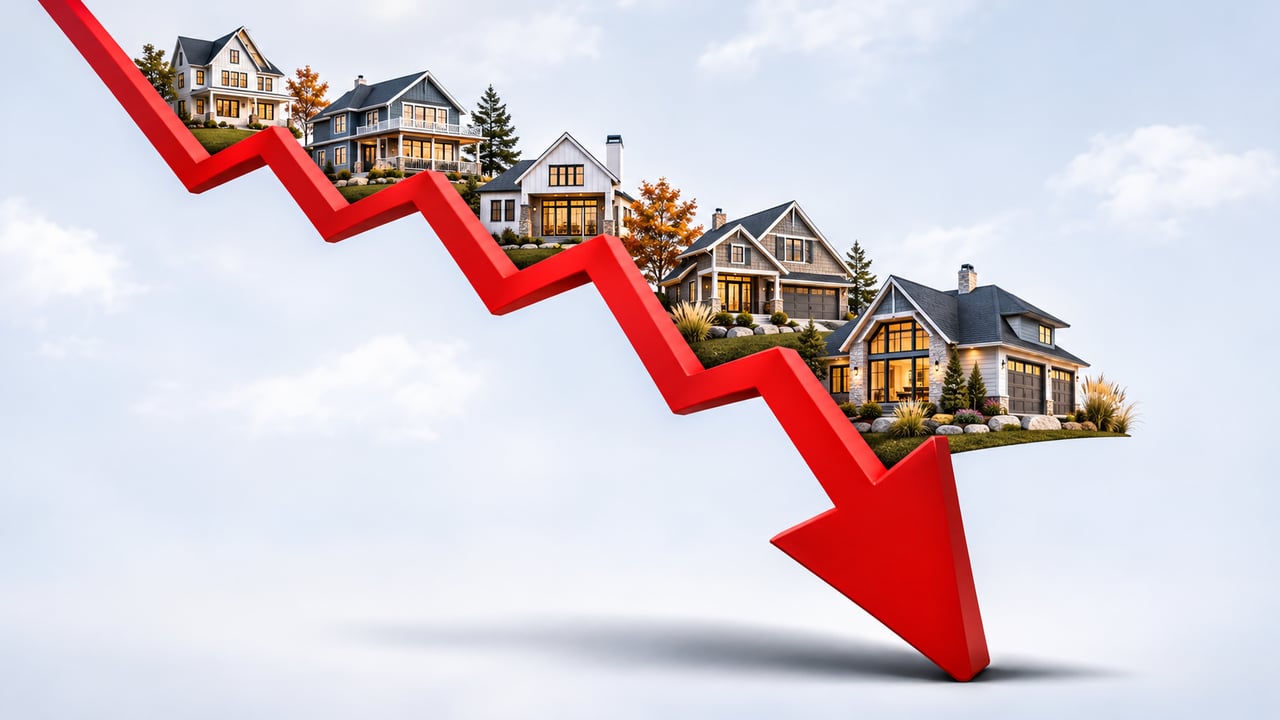
Why High Mortgage Rates Aren’t Causing Home Prices to Crash
Mortgage rates are near multi-year highs, buyer demand has slowed, and more sellers are cutting prices. So why haven’t home values fallen more sharply? The answer comes down to supply, seller equity, and the fact that many homeowners simply do not have to sell.
Mortgage rates are putting serious pressure on the housing market.
The average 30-year fixed mortgage rate recently climbed to around 7.4%, its highest level since late 2023. Higher borrowing costs have reduced buyer purchasing power and caused some would-be buyers to delay their plans. Reuters
At the same time, buyers have more inventory to choose from, price reductions are becoming more common, and homes are taking longer to sell in many markets.
Those conditions might sound like the beginning of a major housing correction.
But home prices have remained surprisingly resilient.
The reason is that today’s market has one major difference from a traditional housing downturn:
Many homeowners are not under enough financial pressure to sell at a steep discount
Mortgage Rates Are Definitely Slowing Buyers Down
There is no question that higher rates are affecting demand.
At roughly 7.4%, today’s mortgage rates make the same home significantly more expensive each month than it would have been with a rate in the 5% or 6% range. Reuters
That means buyers are:
- Lowering their target price
- Taking longer to make decisions
- Comparing more properties
- Asking for seller concessions
- Negotiating more aggressively
- Delaying purchases altogether
Nationally, September existing-home sales improved slightly from August, but they were still 2.2% below a year earlier. NAR also reported that higher rates are keeping some buyers from qualifying altogether. National Association of REALTORS®
So demand is clearly under pressure.
But that does not automatically translate into a collapse in prices.
Sellers Have More Equity Than They Did in Previous Downturns
One of the biggest reasons prices are holding up is homeowner equity.
Many owners purchased years ago at much lower prices, refinanced during the low-rate period, or have simply accumulated substantial equity through appreciation and mortgage payments.
That gives sellers more flexibility.
Instead of being forced to accept a dramatically lower offer, many can:
Wait.
Reduce the price gradually.
Offer a concession.
Rent the property.
Or simply take the home off the market.
The Wall Street Journal recently described this as one of the biggest factors keeping home prices elevated: there are relatively few owners who are desperate enough to sell at a major loss. The Wall Street Journal

The “Lock-In Effect” Still Matters
Another factor is the enormous number of homeowners with mortgages well below today’s rates.
Someone with a mortgage in the 3% or 4% range may be reluctant to sell their current home and replace it with a new mortgage above 7%.
That creates what is often called the mortgage-rate lock-in effect.
It affects both sides of the market.
It limits buyer mobility because moving is more expensive.
But it also limits supply because homeowners who do not need to move may simply stay where they are.
That helps keep inventory from rising enough to create widespread downward pressure on prices. Reuters noted that higher rates are discouraging existing homeowners from listing, particularly among owners carrying significantly cheaper mortgages. Reuters
Inventory Is Rising — But It’s Not Oversupplied Everywhere
Inventory has improved substantially.
Realtor.com reported more than 1.16 million active listings in September, up 5.4% from a year earlier. National inventory is now just 9.1% below typical pre-pandemic levels. Realtor
That is significant progress.
But more inventory does not necessarily mean too much inventory.
Housing markets tend to experience much stronger price pressure when sellers significantly outnumber buyers.
In many areas, that imbalance still has not developed.
Instead, we are moving from an extremely supply-constrained market toward something more balanced.
That distinction matters.
More choice for buyers is not the same thing as a housing glut.
More Sellers Are Cutting Prices
Sellers are becoming more realistic.
In September, 20.8% of active listings had a price reduction, the highest share for any month since October 2022. Realtor
That tells us something important.
Prices are adjusting.
They just are not collapsing.
A seller may reduce a home from $600,000 to $575,000 because buyers are not responding.
That is very different from being forced to sell the property for $450,000.
Price reductions are helping individual properties find the market.
They do not necessarily mean the entire housing market is rapidly losing value.

Asking Prices and Sale Prices Are Different
Another important distinction is the difference between a seller lowering an asking price and the overall value of homes declining.
Nationally, Realtor.com reported the median listing price at $419,250 in September, down 1.4% from a year earlier. Realtor
Meanwhile, NAR reported the median existing-home sale price at $417,500, up 1.3% year over year. National Association of REALTORS®
Those numbers can coexist.
Sellers may be starting with more realistic asking prices, or reducing overpriced listings, while actual transaction prices remain relatively stable.
That is another reason headlines about “price cuts” do not necessarily mean home values are collapsing.
West Michigan Shows How Local the Market Really Is
West Michigan is a good example of why national headlines should be treated carefully.
According to the West Michigan Lakeshore Association of REALTORS®, active listings across Allegan, Muskegon, and Ottawa counties increased 16% year over year in September, while total closed sales declined 18%. Wmlar
But prices moved very differently depending on the county.
Allegan County:
Median sale price: $360,000, down 5.3%.
Muskegon County:
Median sale price: $280,000, up 14%.
Ottawa County:
Median sale price: $430,000, up 6.1%. Wmlar
That is a perfect illustration of why there is no single “housing market.”
One county experienced a decline while two nearby counties still posted meaningful price gains.
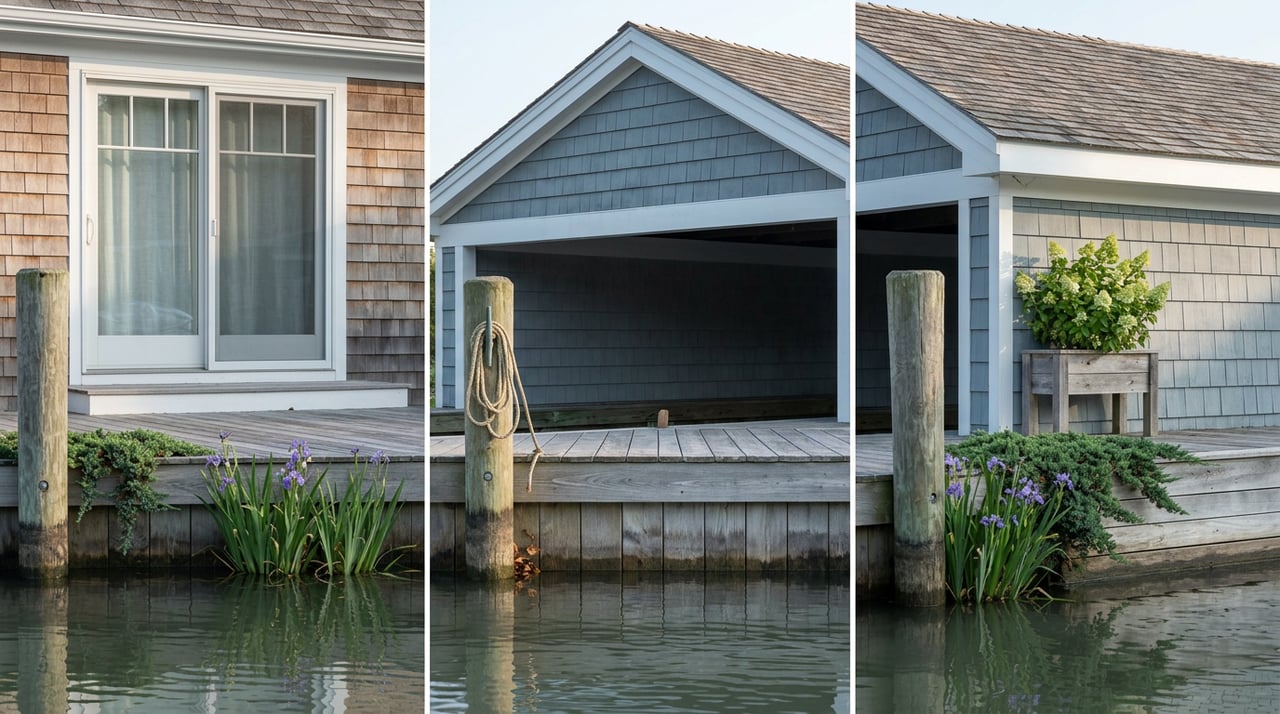
Waterfront and Luxury Properties Can Behave Differently
The same principle applies to property type.
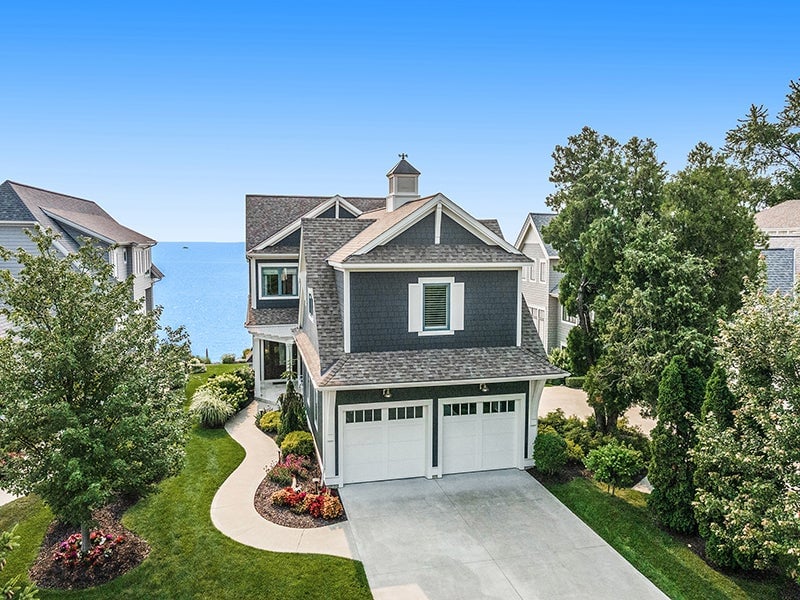
A Lake Michigan property is not necessarily responding to the market the same way as a suburban starter home.
Waterfront and luxury properties are influenced by factors such as:
- Private frontage
- Beach quality
- Bluff height
- Dock rights
- Views
- Privacy
- Architecture
- Lot size
- Location
- Renovation quality
- Availability of comparable properties
Some of these properties are extremely difficult to replace.
When something truly unique becomes available, buyers may still be willing to pay a premium even in a slower market.

Why Sellers Can Afford to Be Patient
A major housing crash usually requires more than high mortgage rates.
It typically requires some combination of:
Large numbers of financially distressed sellers.
Forced selling.
Major job losses.
Excessive housing supply.
Falling demand.
And buyers expecting prices to continue declining.
Today, we have weaker demand and higher borrowing costs.
But widespread forced selling is much less evident.
Many homeowners have substantial equity and fixed-rate mortgages they can continue carrying.
That gives them the ability to wait instead of accepting whatever price a buyer offers.
Does That Mean Prices Cannot Fall?
No.
Prices can absolutely decline.
In fact, some markets and price ranges are already seeing softness.
Realtor.com reported that national median list prices were down year over year for an 11th consecutive month in September. Realtor
And locally, Allegan County’s median sale price declined year over year in September. Wmlar
The important distinction is between:
A gradual market correction
and
A widespread housing crash.
Those are very different scenarios.
Right now, the data looks much more like a slower, more selective market than a sudden collapse.
What This Means for Buyers
For buyers, the current environment can still create opportunities.
More inventory means more choices.
Price reductions give buyers information about seller motivation.
Longer days on market can create negotiating leverage.
And some sellers may be willing to offer:
- Closing-cost assistance
- Mortgage-rate buydowns
- Repair credits
- Flexible closing terms
- Price reductions
But buyers should not automatically assume every property is overpriced or every seller is desperate.
The strongest strategy is still to evaluate the property individually.
What This Means for Sellers
For sellers, the market is less forgiving than it was when inventory was extremely low.
Buyers have more options.
That makes correct pricing increasingly important.
A home that is significantly overpriced may sit on the market while competing properties sell.
Sellers should pay close attention to:
Comparable sales.
Active competition.
Days on market.
Buyer feedback.
Showing activity.
Price reductions on competing listings.
And financing challenges buyers may be facing.

The Market Is Becoming More Balanced — Not Necessarily Breaking
The biggest change happening right now may simply be normalization.
For years, buyers dealt with extremely limited supply.
Now inventory is increasing.
Sellers are negotiating more.
Price reductions are becoming common.
Homes may take longer to sell.
Those are normal characteristics of a more balanced market.
They can feel dramatic only because the housing market was so competitive for several years.
The Bottom Line
Mortgage rates above 7% are clearly making the housing market more difficult.
Buyer demand is weaker.
More sellers are cutting prices.
Inventory is increasing.
But those conditions alone do not automatically create a housing crash.
Homeowners have substantial equity, many sellers are not under financial pressure, and the lock-in effect continues to limit the supply of homes coming to market.
That is helping keep prices relatively resilient even as activity slows.
For West Michigan buyers and sellers, the most important takeaway is that the market is becoming more local and more property-specific.
Some homes will still attract strong demand.
Others may require price reductions and concessions.
And conditions can vary considerably between Holland, Saugatuck, Grand Haven, South Haven, Muskegon, Grand Rapids, and the surrounding communities.
The market is changing.
But changing is not the same thing as crashing.