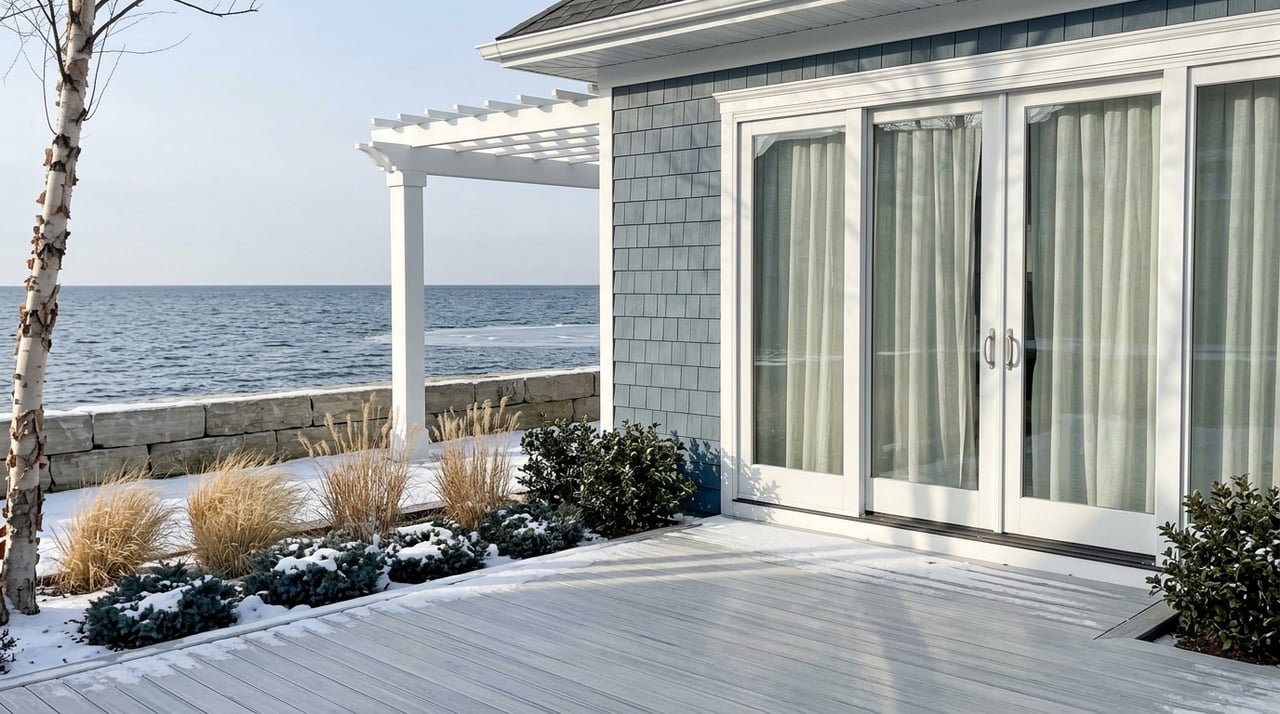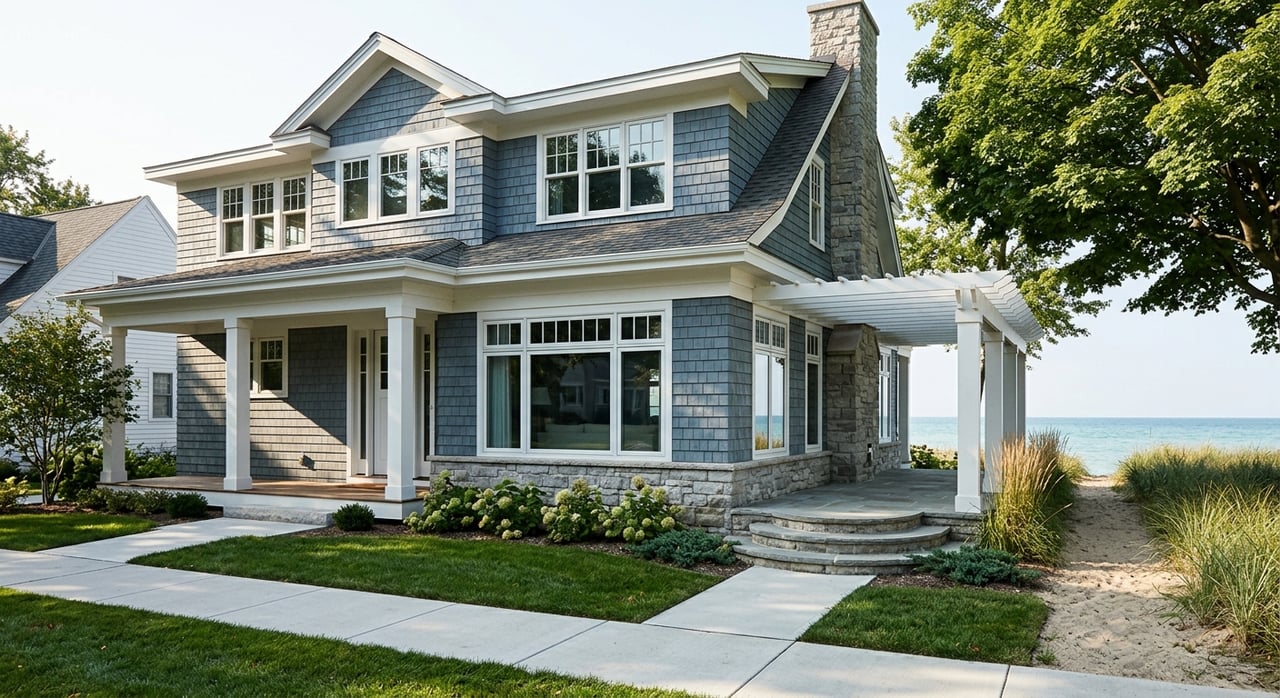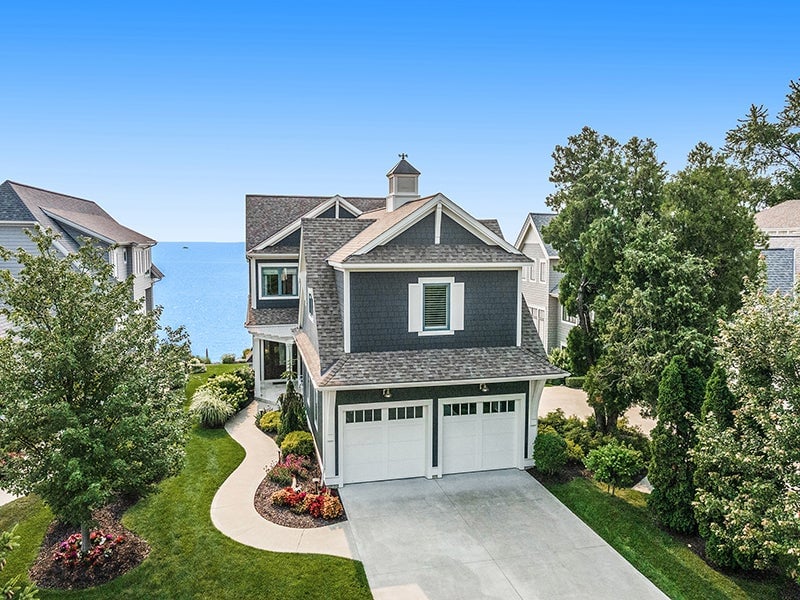
Fewer competing buyers, more homes to choose from, and sellers facing year-end decisions may give West Michigan buyers more leverage than they had earlier in the year.
The weeks between Thanksgiving and New Year’s are not usually considered the busiest part of the real estate calendar.
That can be exactly why prepared buyers should pay attention.
As the holidays approach, fewer buyers tend to be actively touring homes, some properties have already been sitting on the market for months, and certain sellers become increasingly interested in getting a deal completed before the end of the year.
Here in West Michigan, those seasonal conditions are arriving at the same time buyers already have more options.
According to the West Michigan Lakeshore Association of REALTORS®, there were 1,241 active listings across Allegan, Muskegon, and Ottawa counties in October — 10% more than one year earlier. Meanwhile, closed sales fell 21% year over year to 429 homes.
That does not mean every seller is ready to accept a low offer.
But it does mean buyers may have more room to negotiate than they did when inventory was tighter and competition was stronger.

Why the Holidays Can Change the Negotiation
Real estate negotiations are influenced by more than the home itself.
Timing matters.
A seller listing a property in April may be comfortable waiting several weeks to see what the spring market brings.
A seller still on the market in late November may be thinking differently.
They may be asking:
Will buyer activity slow further in December?
Do we want to carry this home through winter?
Should we reduce the price?
Would we rather close before the end of the year?
Should we withdraw and try again in spring?
Those questions can create opportunities for buyers who are ready to act.
Redfin recently found that holiday-season buyers can benefit from reduced competition because fewer people are actively house hunting, while some sellers with older listings become increasingly motivated to make a deal before year-end.
Buyers Have More Homes to Compare
Inventory is one of the biggest reasons buyers may have additional leverage right now.
West Michigan had 1,241 active listings in October, compared with fewer listings one year earlier.
County inventory included:
- Allegan County: 302 active listings, up 11%
- Muskegon County: 471, up 7.5%
- Ottawa County: 468, up 10%
More options change the conversation.
When buyers only have one realistic property available, the seller may hold most of the negotiating power.
When buyers can choose among several comparable homes, sellers have to compete for attention.
Buyers can compare:
- Price
- Condition
- Updates
- Taxes
- Lot
- Location
- Garage space
- Finished square footage
- Days on market
- Seller concessions
That makes an overpriced or poorly positioned listing easier to identify.
Fewer Buyers Can Mean Less Competition
More inventory alone does not automatically create leverage.
The other side of the equation is demand.
West Michigan closed sales fell 21% year over year in October.
Nationally, recent Redfin data also shows buyers pulling back. Pending sales have weakened, homes are taking slightly longer to sell, and there are more homes available than a year ago.
Higher mortgage rates are one major reason.
As of late October, the national average 30-year mortgage rate was around 7.24%, compared with 6.17% one year earlier.
Higher borrowing costs reduce what buyers can comfortably afford.
That is difficult for buyers overall, but it also removes some competition from the market.
The buyers who remain active may have more negotiating room.
Where Buyers May Be Able to Negotiate
Negotiation does not have to mean one thing.
Most people immediately think:
Offer less than asking price.
That is certainly one possibility.
But there are several other areas where buyers may be able to negotiate.
Purchase Price
A seller with a property that has been sitting for several months may be more willing to consider an offer below asking.
The amount should still be supported by comparable sales, condition, and competition.
Closing Costs
A buyer may ask the seller to contribute toward certain allowable closing costs.
For a buyer trying to preserve cash after closing, this can sometimes be more valuable than a small price reduction.
Mortgage-Rate Buydowns
With mortgage rates above 7%, rate buydowns have become increasingly relevant.
A seller contribution used toward an eligible rate buydown can potentially reduce the buyer’s payment, depending on the loan program and structure.
Repairs
After inspection, buyers may be able to negotiate for certain repairs to be completed before closing.
Repair Credits
Instead of having the seller complete the work, the parties may agree on a credit where permitted by the lender and contract.
Appliances or Furniture
This can be especially relevant with second homes, luxury properties, and furnished waterfront homes.
Closing Date
Some sellers care considerably about timing.
A buyer who can accommodate the seller’s preferred closing date may gain leverage elsewhere in the offer.
Possession
Flexible possession terms can sometimes make an offer more attractive without increasing the purchase price.

Seller Concessions Are Becoming More Common
This is not just theoretical.
Redfin reported that sellers provided concessions in 44.7% of U.S. home sales in its August analysis, up from 42.6% one year earlier.
Roughly 15% of buyers received both a seller concession and a price reduction.
Those numbers vary significantly by market, and they should not be applied directly to every West Michigan transaction.
But they demonstrate an important shift:
Buyers are increasingly negotiating beyond the purchase price.
That matters when affordability remains one of the biggest obstacles in the market.
Older Listings Deserve Extra Attention
One of the best places to look for negotiating opportunities is among homes that have been on the market for a while.
A property listed last Thursday is different from one that has been available since July.
An older listing may have:
- Experienced multiple price reductions
- Received repeated showing feedback
- Lost a previous buyer
- Been passed over for competing homes
- Become vacant
- Accumulated carrying costs
- Reached a point where the seller’s priorities have changed
This does not mean something is necessarily wrong with the property.
Sometimes the original price was simply too aggressive.
Sometimes the home was poorly marketed.
Sometimes the seller’s expectations were based on a stronger market.
The important thing is to understand the listing’s history.
Price Reductions Can Tell a Story
Suppose a home originally came on the market at:
$800,000
Then reduced to:
$775,000
Then:
$749,000
And now sits at:
$725,000
That history is valuable information.
The seller has already received feedback from the market.
But the current price still needs to be evaluated against comparable sales.
A home with several reductions is not automatically a bargain.
Sometimes the seller is finally reaching market value.
Other times additional negotiating room may still exist.

Vacant Homes Can Create Different Motivations
Vacant properties can be particularly interesting heading into winter.
An owner may be paying for:
- Mortgage payments
- Property taxes
- Insurance
- Utilities
- Snow removal
- Maintenance
- Security
- Heating
without living in the property.
That does not automatically mean the seller is desperate.
But carrying a vacant West Michigan home through another winter has real costs and responsibilities.
Some sellers may value a clean, predictable transaction before year-end.
Holiday Timing Can Matter to Sellers
The calendar itself can become part of the negotiation.
Some sellers may prefer to:
- Close before December 31
- Avoid maintaining an empty property over winter
- Complete a relocation
- Finish an estate sale
- Free up cash for another purchase
- Stop showing the property during the holidays
Others may have no urgency whatsoever.
That is why understanding seller motivation matters.
A buyer should never assume someone has to sell.
Instead, your agent can ask the listing agent questions about the seller’s preferred timing and priorities.
A Clean Offer Can Be Powerful
Buyer leverage does not always mean submitting the lowest possible number.
Sometimes a seller will accept slightly less money in exchange for a cleaner transaction.
That might include:
- Strong financing
- Reliable lender communication
- Reasonable inspection terms
- Flexible closing
- Strong earnest money
- Fewer unnecessary contingencies
- Clear documentation
The goal is to understand what matters to the seller and structure the offer accordingly.
Price is important.
But it is only one part of an offer.
Don't Confuse Leverage With a License to Lowball
This is important.
More negotiating power does not mean every home should receive an aggressive low offer.
A well-priced home in a desirable neighborhood may still attract multiple buyers.
A new listing may have very little negotiating room.
A unique waterfront property may have few substitutes.
A seller who does not need to move may simply reject an unrealistic offer.
Before deciding on a number, buyers should consider:
- Comparable sales
- Current competition
- Days on market
- Price history
- Condition
- Recent activity
- Seller motivation
- Property type
- Location
The strongest negotiation strategy is supported by data.
Waterfront Homes Can Be Different
The West Michigan waterfront market deserves its own analysis.
Seasonality can have a larger effect on buyer activity for:
- Lake Michigan homes
- Lake Macatawa properties
- Saugatuck-area waterfront
- Spring Lake
- Muskegon Lake
- Inland lakes
- Riverfront properties
Summer allows buyers to experience boating, beaches, docks, outdoor entertaining, and sunsets.
By late November, the experience is very different.
That can reduce casual buyer traffic.
For serious waterfront buyers, however, winter can create useful negotiating and due-diligence opportunities.
It also allows buyers to evaluate:
- Wind exposure
- Bluff conditions
- Winter road access
- Drainage
- Heating performance
- Snow removal
- Shoreline conditions
- Year-round neighborhood activity
A waterfront seller may also be considering the cost of maintaining a second home through another winter.
But unique frontage remains unique.
Seasonality does not automatically make a quality waterfront property inexpensive.
Winter Buyers Trade Selection for Competition
There is a tradeoff.
Buyers shopping during the holidays may face fewer competitors.
But fewer new properties typically come onto the market as well.
Redfin’s holiday analysis describes this clearly: late-year buyers may have fewer fresh listings to choose from, but the buyers who remain can face less competition and encounter sellers more willing to negotiate.
That means buyers should not purchase a property simply because it appears to be a deal.
The home still needs to fit:
- Your budget
- Your timeline
- Your location needs
- Your long-term plans
- Your property requirements
Negotiating leverage only matters if it is a home you actually want.
Higher Rates Make Negotiation More Important
Mortgage rates remain one of the biggest challenges for buyers.
Realtor.com reported that rates surged during October, at one point reaching approximately 7.40%, reducing the amount buyers could finance with the same monthly payment.
That makes every part of the deal more important.
Buyers should evaluate:
- Purchase price
- Interest rate
- Seller credits
- Property taxes
- Insurance
- HOA fees
- Expected maintenance
- Immediate repairs
A lower purchase price is useful.
But the best negotiation may sometimes involve a combination of price and concessions that improves the buyer’s overall financial position.
Who May Have the Most Leverage?
Buyers should pay particularly close attention to:
Homes that have been listed since summer
Properties with multiple price reductions
Vacant homes
Listings that previously went pending
Homes facing newer and better-priced competition
Properties requiring cosmetic updates
Second homes
Certain luxury properties
Homes where the seller wants to close before year-end
These situations do not guarantee a discount.
They simply provide reasons to investigate further.
The West Michigan Market Is Giving Buyers More Choices
The broader West Michigan numbers support the idea that buyers have more breathing room.
October finished with:
1,241 active listings — up 10%
429 closed sales — down 21%
$340,000 regional median sale price — down 6.2% year over year
across Allegan, Muskegon, and Ottawa counties.
Those numbers do not mean West Michigan has become one uniform buyer’s market.
Ottawa, Muskegon, Allegan, Holland, Saugatuck, Grand Haven, waterfront areas, luxury properties, and individual neighborhoods can all behave differently.
But buyers generally have something they have not always had in recent years:
More choices and more time to evaluate them.
The Bottom Line
The holidays can create an interesting window for West Michigan buyers.
There are more homes available than a year ago.
Fewer transactions are taking place.
Some properties have been sitting for months.
And certain sellers may prefer to complete a deal before winter or the end of the year.
That can create negotiating opportunities around:
Price.
Closing costs.
Repairs.
Rate buydowns.
Possession.
Timing.
But leverage should not be confused with the ability to dictate terms.
The best approach is to understand the property, study the comparable sales, review the listing history, identify seller motivation, and structure an offer around the specific situation.
For buyers who find the right home, the weeks heading into the holidays may offer more negotiating room than they expect.